The 2026 AI Revolution: How One-Person Companies (OPCs) are Reshaping the Global Economy
Aug 15, 2026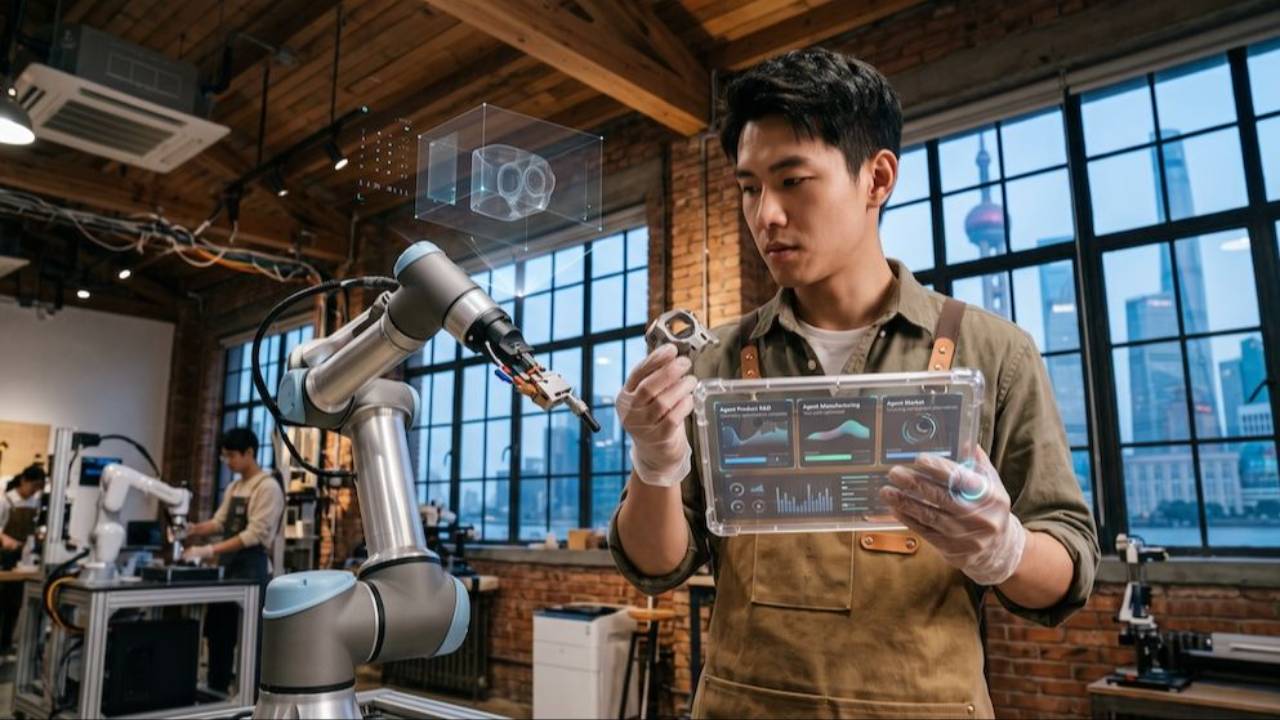
By Garbo Tian
💡 Core Strategic Takeaway
The OPC revolution is moving from isolated tool adoption toward ecosystem maturity, supported by computing subsidies, digital communities, industrial integration, and trust infrastructure.
In 2026, the entrepreneurial landscape is undergoing a profound transformation. While large enterprises grapple with the "AI maturity gap"—where McKinsey reports that while 88% of firms adopt AI, less than 1% achieve true maturity—a more agile entity is emerging: the One-Person Company (OPC).
As highlighted in the 2026 China AI Era OPC Ecosystem White Paper, the "Super Individual" era is no longer a theoretical trend; it is a massive structural reality.
The Scale of the OPC Revolution
By mid-2025, China alone was home to over 16 million registered single-member limited liability companies. This represents a significant shift: nearly 27.4% of all enterprises are now OPCs, with a 47% year-over-year growth rate in new registrations.
💡 Key Data Insights:
The "Super Individual" Dominance: 75% of OPC founders come from non-technical backgrounds, with 26% transitioning directly from product or operations roles.
AI Leverage: For every 1 RMB invested in AI, OPC founders achieve an equivalent productivity output that would traditionally require 75 RMB in human labor costs.
The Talent Pipeline: OPCs are attracting top-tier talent; 44% of founders have experience at major internet tech firms, and 60% of the ecosystem is composed of founders from the 90s and 00s generations.
1. Why AI OPCs are Dominating
The OPC model succeeds because it fundamentally redefines organizational competitiveness using this formula: Organizational Competitiveness = (Talent Density × AI Leverage) / Organizational Friction.
Maximum Talent Density: As a single-founder entity, the OPC achieves 100% talent density.
AI Leverage: By utilizing a "1+N" model (1 Super Individual + N AI Agents), solo founders scale their creative output to enterprise levels.
Zero Organizational Friction: OPCs eliminate the "internal tax"—no bureaucratic approvals, no departmental walls, and no communication latency.
For larger companies, this creates a compelling case: instead of massive layoffs to cut costs, firms are increasingly leveraging their existing workforce to activate "intrapreneurial" OPC units, which can improve organizational capability at 73% lower costs than external recruitment.
2. Infrastructure for the Individual Era
The rise of the OPC is supported by a massive infrastructure push. More than 30 cities across China have launched specialized OPC support policies to foster this "new intelligent economy".
Computing Power Subsidies: Cities like Shenzhen and Beijing offer "Training Vouchers" (up to 10 million RMB) and "Model Vouchers" (up to 2 million RMB) to reduce the cost of AI development.
Physical & Digital Communities: From Shanghai’s "Zero-Boundary Magic Cube" OPC community to Hangzhou’s "Honghu Hub," cities are providing low-cost office spaces and specialized mentorship networks.
Industrial Integration: Forward-thinking regions are connecting individual AI developers with real-world industrial manufacturing data, allowing OPCs to solve practical industrial problems rather than just building digital toys.
3. The Trust Infrastructure: SEE AI
Despite the efficiency gains, OPCs face a significant "trust bottleneck": How can a potential client verify that a solo founder is capable of enterprise-level delivery?
The SEE AI platform is addressing this by building the "Trust Infrastructure" for the OPC era.
Verification: Using blockchain-based reputation technology, SEE AI verifies an individual's code contributions and project experience, creating an immutable "digital passport" for talent.
Ecosystem Closing: By connecting OPC incubation, policy matchmaking, and industrial scene docking, SEE AI creates a closed loop that allows solo founders to find and fulfill professional orders with greater ease.
The Path Forward
The OPC era is transitioning from "policy-driven" growth to "ecosystem-driven" maturity. As the white paper concludes, the future of work is not about being a small cog in a cold system; it is about becoming a complete, autonomous, and free economic unit.
Are you ready to build your own "Super Individual" OPC? Focus on integrating your unique industry insights with AI execution to capture your share of this trillion-dollar narrative.
❓ Frequently Asked Questions
Q: Why are OPCs gaining economic importance?
A: AI leverage lets individuals deliver work that once required larger organizations, with lower labor cost and less internal friction.
Q: What infrastructure supports the model?
A: Computing subsidies, OPC communities, industrial pilot projects, verification systems, and order-matching networks all reduce startup friction.
Q: What is the next stage of OPC growth?
A: The model is shifting from policy-driven experimentation toward ecosystems that connect talent, trust, customers, and industrial demand.
🎓 Build Your AI-Native One-Person Company
Explore SOLOMOAT Mini-MBA masterclasses for deeper frameworks on China, AI automation, business systems, and global growth.