When AI Enters the Chinese Gaokao, the Real Test for Humanity Begins.
Jul 09, 2026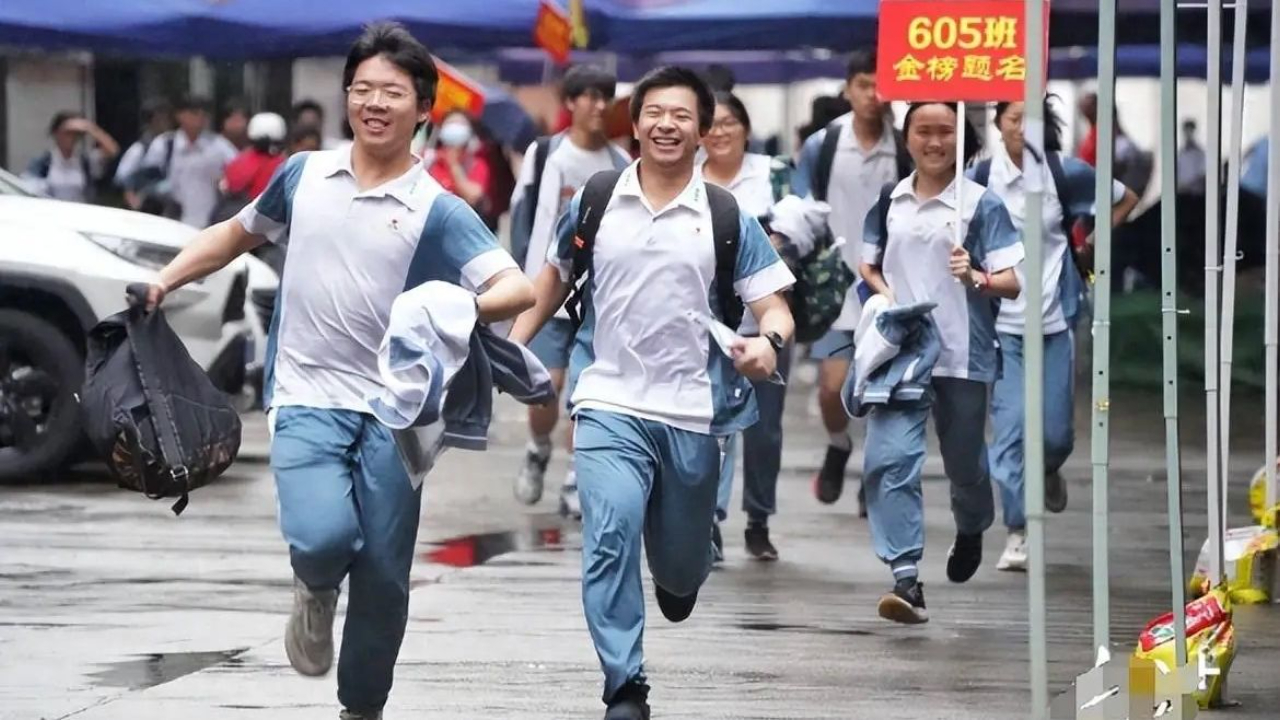
June 2026 marked the annual national college entrance examination in China. Behind the 720,000 candidates in Shandong and millions nationwide, the public focus quietly shifted. Attention was no longer fixed on difficult math finale problems or the interpretive nuance of classical Chinese texts. Instead, it converged—almost unfocused—on the essay prompt.
Media reports indicate that in multiple provinces this year, essay topics converged on a shared set of themes: large language models, AI agents, technological ethics, and the trajectory of human civilization. The question of how technological singularity reshapes human agency moved to the center. On the surface, this remains a standardized admissions exercise. In substance, it functions as a postmodern mirror, reflecting a collective anxiety as society absorbs rapid technological escalation and systemic instability.
To understand the resonance of this year’s essay prompt, it is necessary to revisit the underlying logic that has supported the gaokao for decades.
In the industrial and early information eras, the exam functioned as a high-bandwidth filtering system for knowledge retrieval and accurate replication. For twelve years of basic education, students were trained to format the mind into a structured database: who could memorize more facts in history and geography; who could compute faster in mathematics and physics; who could conform more closely to the “standard answer” in language comprehension.
By 2026, that competitive dimension has shifted into a form of structural compression.
With multimodal foundation models and AI agents advancing rapidly, machines have crossed linguistic boundaries and now operate at scale and speed that compress years of human training into seconds. They generate professional-grade code, draft legally coherent opinions, execute statistical modeling, and even assist in laboratory material selection. When these capabilities are accessible through inexpensive API calls, the traditional moat built around standardized answers collapses almost instantly.
If the advantage accumulated through more than a decade of study can be replicated in seconds at marginal cost, the real question becomes: what remains of “merit” as it has traditionally been defined?
The unexpected prominence of this year’s essay topic reflects a broader social recognition of this depreciation of skill value.
Not long ago, generative AI remained an elite topic confined to Silicon Valley engineers, programmers, designers, and high-income analysts. The dominant view held that it would intensify white-collar competition but remain distant from everyday life, secondary industries, or secondary education.
By 2026, that perception has been overturned. Foundation models have become part of social infrastructure, embedded across sectors. The abstraction has given way to exposure.
Parents increasingly observe that once-stable career paths—translation, junior legal work, entry-level programming, accounting, industrial design—are eroding under automation pressure. Students preparing for exams begin to recognize, between study sessions, that the “ivory tower” they are climbing may already be structurally reshaped by AI systems.
When this anxiety about future employability is encoded into a national selection instrument such as the gaokao essay, it reveals a blunt reality: AI has moved from frontier technology to institutional structure. The question is no longer how to use a tool, but how to define human existence alongside it.
Across the history of technological evolution, each productivity leap has reorganized the division of labor between body and mind.
The Industrial Revolution replaced human muscle with mechanical power, shifting labor from physical exertion to cognition.
The internet compressed time and space, eliminating large volumes of repetitive information transmission work.
The era of foundation models now extends automation into what was once considered the final domain of human exclusivity: cognition and creativity.
This creates a closed and increasingly uncomfortable loop. The most vulnerable actors are no longer those who cannot use AI, but those who continue to compete against it using industrial-era assumptions—trying to outperform machines in standardized-answer environments.
For decades, East Asian exam systems have reduced education to knowledge transmission, selection to marginal score differences, and success to proximity to predefined answers. Yet large models are, at their core, systems optimized to approximate human-preferred “correct responses” through probabilistic distributions. In that domain, human cognition cannot outcompete silicon-based computation scaled by energy and compute.
As the marginal cost of knowledge approaches zero, legacy education frameworks and talent evaluation systems lose their grounding.
In the previous regime, competitiveness was defined by what one knew, by the ability to reproduce answers, and by the replication of procedural experience.
In the new regime, defensible advantage shifts toward what one deems important, how one defines problems, and how effectively one integrates across domains—technology, humanities, and real-world constraints.
Education that fails to transform students from exam-optimized operators into independent thinkers will produce graduates whose exit from school coincides with their entry into obsolescence.
This may be the most significant implication of this year’s essay prompts.
On the surface, they test engagement with frontier technology. In reality, they function as a signal from the institutional selection system: a notification that the rules governing social mobility are changing.
The gaokao remains important, but it is gradually leaving its role as a single decisive filter and becoming one checkpoint in a longer trajectory. What will define individuals, economies, and societies is no longer a single score, but sustained learning capacity, psychological resilience in uncertainty, and the ability to co-create with machine intelligence.
As AI integrates into society like electricity, water, and the internet, the real examination has only just begun.
There is no syllabus. No model answers. No second attempt.
Every participant is both candidate and grader.