
AI Profit Map Rewritten: China’s First Entry Into the Industry’s Most Profitable Layer
Jul 16, 2026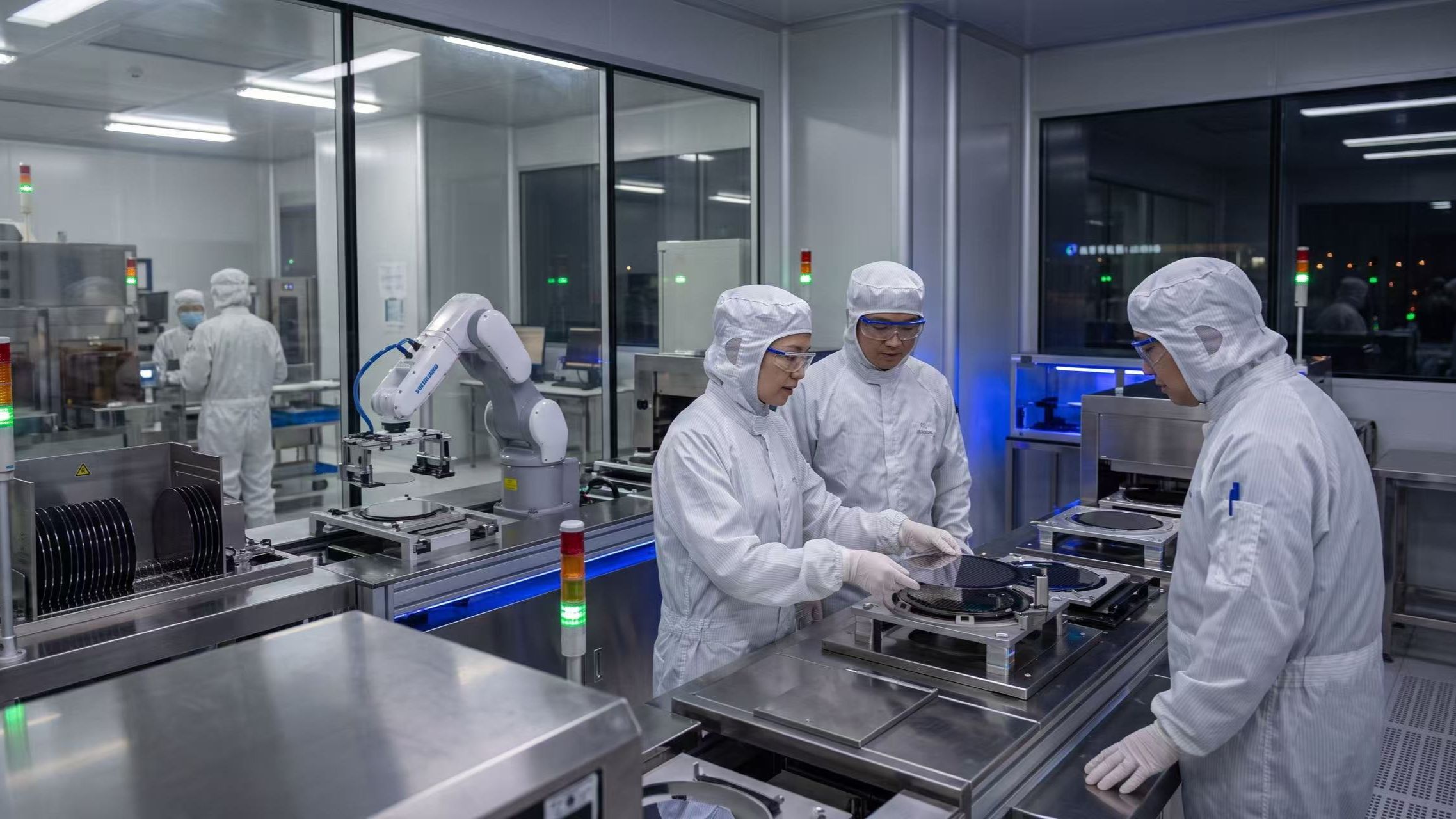
By Garbo Tian
Over the past two years, artificial intelligence has been the defining story in global capital markets. From NVIDIA’s market capitalization surpassing $5 trillion to repeated valuation records in foundation model companies, nearly every narrative has centered on how AI is reshaping the world. Yet once the focus shifts from technological progress to profit allocation, a more consequential question emerges: who is actually capturing the money in this global AI boom?
Many assume the answer is NVIDIA, setting a new benchmark for corporate profitability. But moving further up the value chain reveals a more complex distribution of gains. GPUs are not the endpoint.
💡 Quick Takeaways: The Shifting AI Profit Map
- The Core Bottleneck: AI performance is not determined by compute alone, but by data movement. Without High-Bandwidth Memory (HBM), the most advanced GPUs are forced into idle cycles.
- The Strategic Shift: ChangXin Memory Technologies' IPO marks a structural inflection point—signaling China's transition from a participant in AI supply chains to a claimant in AI profit distribution.
1. Compute vs. Data Flow: The Dual Control Nodes
Large models with trillions of parameters constantly shuttle massive volumes of data between GPUs and memory systems. Without high-speed storage and memory bandwidth, even the most expensive AI accelerators cannot operate at full capacity. In this architecture, another group of winners has emerged: memory manufacturers.
For decades, memory chips were treated as a cyclical, low-margin hardware business. That framing has changed. Today, the global HBM market is dominated by SK Hynix, Samsung, and Micron—firms that are now capturing a disproportionate share of AI-era profits.
Key Framework: The Structural Logic of AI Hardware
- Compute (NVIDIA): GPUs determine the absolute processing speed.
- Data Flow (HBM Suppliers): Memory bandwidth determines data throughput and utilization limits.
2. From Scale to Positioning: The China Semiconductor Pivot
On June 12, ChangXin Memory Technologies received regulatory approval for its IPO, aiming to raise RMB 29.5 billion on the STAR Market. Over the past two decades, China’s semiconductor sector has been in a catch-up cycle. Chinese firms have largely been concentrated in adjacent layers—server manufacturing, optical modules, and data center infrastructure. These segments are large in scale but structurally weak in pricing power.
In this industry, profit is not determined by scale. It is determined by positioning. NVIDIA anchors the GPU ecosystem. TSMC anchors advanced manufacturing. SK Hynix anchors HBM. The significance of ChangXin lies in its potential entry into one of these core nodes: memory.
| Strategic Dimension | The Manufacturing Era (Old Logic) | The AI Era (New Alpha) |
|---|---|---|
| Core Value Driver | Industrial Scale: Expanding production capacity to capture thin manufacturing margins. | Irreplaceable Nodes: Sitting on strategic chokepoints to capture sustained excess returns. |
| Memory Positioning | Standard DRAM: Treated as a cyclical, low-margin supporting component. | HBM (High-Bandwidth Memory): The strategic endpoint and constraint of the AI compute stack. |
| Global Role | Participant: Integrating into supply chains with weak pricing power. | Claimant: Repositioning to command technology rent and global profit allocation. |
3. The Trajectory of China's Economic Shift
The market has historically viewed ChangXin as a DRAM producer. But DRAM is only the starting point. Control of advanced DRAM capability is a prerequisite for entering HBM. This shift mirrors China’s broader economic trajectory:
- The Reform Era: Labor-driven integration into global supply chains.
- The Internet Era: Platform-scale expansion defined by user traffic.
- The AI Era: A decisive move toward capturing strategic nodes and high-margin hardware infrastructure.
Constraints remain—gaps persist in advanced packaging, CUDA’s software moat, and advanced process limitations. But the structural difference is clear. The central question for China’s semiconductor industry over the past two decades was whether it could produce. The question for the next decade is whether it can participate in global AI profit allocation. ChangXin’s IPO may be the beginning of that answer.
❓ Frequently Asked Questions
Q: Why isn't NVIDIA capturing all the profits in the AI boom?
A: Because AI performance requires both compute and data movement. Without High-Bandwidth Memory (HBM) to shuffle massive data volumes, expensive GPUs sit idle. Therefore, memory manufacturers controlling HBM are capturing a disproportionate share of the profit.
Q: What is the strategic significance of the ChangXin Memory IPO?
A: It signals a structural repositioning. Chinese semiconductor firms are moving away from being mere participants in low-margin supply chains (like server assembly) and attempting to capture highly profitable, irreplaceable strategic nodes like advanced memory.
🎓 Deepen Your Strategic Mastery
In the tactical sandboxes of the SOLOMOAT Mini MBAs, we decode the underlying business logic behind global asset strategies and macroeconomic shifts. We do not teach greed; we teach you how to see through market illusions and keep the key to the vault firmly in your grasp before the world spins out of control.