AI Video Generation: Breaking Open the Boundaries of Creation
Jul 23, 2026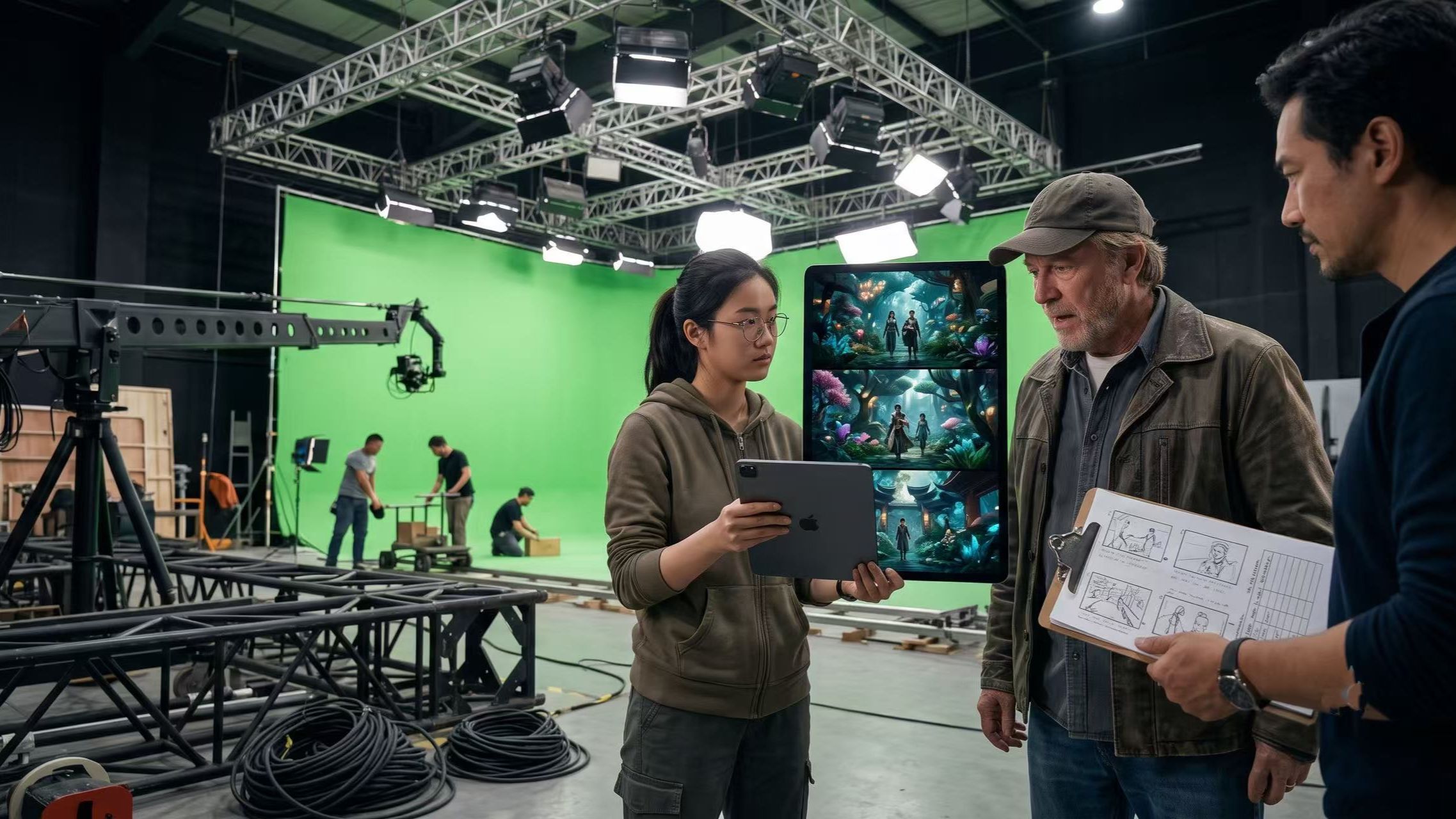
By Garbo Tian
If one were to identify the most closely watched frontier in AI during the second half of 2025, video generation would be an unavoidable answer. After OpenAI released Sora 2 and pushed it to consumer applications, interest in AI-generated video spread globally at viral speed.
Yet a closer reading of the industry trajectory shows that this was not a sudden breakout moment. It is the accumulation of two years of steady progress in rendering quality, temporal modeling, and usability. Across systems such as Sora, Veo, and Tongyi Wanxiang, both incumbents and startups have contributed to a rapid acceleration in iteration cycles for AI video capabilities. The deeper shift is unfolding inside the industry itself.
As model improvements move beyond visual fidelity alone and begin to incorporate narrative coherence, character and style consistency, audio-visual synchronization, and cross-shot continuity—elements closer to industrial production workflows—AI video crosses a critical threshold. Once generation moves from “watchable” to “usable” and “production-ready,” it exits the realm of novelty and enters mass adoption.
💡 Core Strategic Takeaway: From Novelty to Infrastructure
- The Consumer vs. Enterprise Fault Line: While C-side tools prioritize novelty and entertainment, B-side commercial deployment demands multi-shot continuity, character consistency, and 15-second stability.
- The Production Shift: Video production is transitioning from linear, labor-heavy pipelines to model-centered parallel generation, multiplying efficiency by 5 to 8 times.
1. When New Technology Meets an Old Problem
Over the past decade, video has become one of the fastest-growing, most capital-intensive, and most innovation-driven sectors globally—from film and advertising to e-commerce content, social platforms, and the creator economy. But as the industry matures and competition intensifies, content production is being pushed to its limits. Short dramas, e-commerce assets, and advertising have entered a phase defined by “faster, finer, and more abundant” output cycles, compressing refresh cycles into hours or even minutes.
This tension manifests differently across segments. Film and advertising production still rely heavily on experience-intensive human labor, with high costs for pitching and iteration. MCNs and e-commerce operations require high-frequency, fragmented content far beyond the capacity of conventional filming and editing pipelines.
| Deployment Environment | Core Priority & Focus | Operational Threshold |
|---|---|---|
| Consumer (C-Side) Contexts | Entertainment, personalization, and playful self-expression. | Low stability requirement; occasional inconsistencies are fully tolerated by users. |
| Enterprise (B-Side) Production | Cross-shot consistency, character/style stability, reusability, and concurrent scale. | Strict determinism required; must integrate seamlessly into industrial workflows. |
2. Engineering Production-Ready Infrastructure: The Wan2.6 Breakthrough
Alibaba has chosen a more difficult but structurally more consequential path: turning AI video generation into industry-level infrastructure. With the commercial deployment of Tongyi Wanxiang 2.6 (Wan2.6), the model is specifically designed to address the industry’s transition from “can generate” to “can produce.”
- Multi-Shot Narrative Coherence: Instead of generating isolated clips and stitching them awkwardly, Wan2.6 builds temporal and cinematic structure holistically, treating camera transitions as a controllable variable driven by natural-language storyboards.
- Video-Based Reference Inputs: Upgrading reference inputs from static images to video, Wan2.6 captures visual identity, motion patterns, expressions, and vocal characteristics to support synchronized audio-visual generation.
- The 15-Second Sweet Spot: Stabilizing controllable generation at approximately 15 seconds with 1080P output and synchronized audio—long enough for narrative structure, yet short enough to manage revision costs.
3. The Era Where Anyone Can Become a Director
As recently as a year ago, many in film and video production would not have imagined that their productivity could be multiplied several times over. Platforms like Ima Studio and workflows powered by AI animation studios like Jirilu demonstrate that reliable infrastructure is compressing the production stack.
Previously, cinematic language, narrative rhythm, and visual expertise were concentrated in professional studios. As these capabilities become encoded into models, the skillset required of creators shifts from execution toward judgment, creativity, and decision-making. The end state of video generation is not the replacement of creators, but a reallocation of human attention toward ideas and narrative.
❓ Frequently Asked Questions
Q: What is the main difference between consumer-facing and enterprise-grade AI video tools?
A: Consumer tools prioritize novelty, entertainment, and playability where inconsistencies are tolerated. Enterprise tools require strict multi-shot consistency, character/style stability, reusability, and scalable concurrent output for commercial workflows.
Q: Why is multi-shot narrative capability critical for video generation models?
A: Single-shot quality is rarely the main challenge in real production. Multi-shot coherence ensures that characters, scenes, and temporal logic remain consistent across camera transitions, removing the need for manual post-production stitching.
🎓 Deepen Your Strategic Mastery
Ready to understand how AI-native video infrastructure is reshaping enterprise workflows? In the SOLOMOAT Mini MBAs, we decode the precise AI toolchains, multi-model production frameworks, and commercial scalability strategies you need to build a future-proof enterprise.