From Solopreneur to SoloMoat: How to Build a True Asset-Premium Commercial Moat for Your One-Person Company
Aug 16, 2026
When founders discuss "commercial moats," they usually reference enterprise scale: massive distribution networks, billions in capital, or proprietary patent portfolios. As a result, most solopreneurs assume that a zero-employee business can never possess a real moat—that independence inherently means remaining small, flexible, and fundamentally temporary.
By SOLOMOAT Editorial Team
💡 Core Strategic Takeaway: Convert Expertise into an Asset-Premium SoloMoat
- Pricing power comes from proprietary systems and switching costs, not simply from working more client hours.
- A resilient one-person company compounds commercial leverage through repeatable IP, market signals, and rigorous validation.
This is a critical strategic misunderstanding.
A commercial moat is not defined by headcount or corporate capital; it is defined by pricing power, retention leverage, and defense against margin compression.
If your one-person operation competes on price, response speed, or basic output volume, you are in a race to the bottom against an infinite supply of AI tools and offshore freelancers. To capture a true asset premium, you must transform your business from an active service desk into a SoloMoat—a proprietary commercial ecosystem that compounds value independently of your direct labor.
The Hidden Failure Mode: The High-Income Freelancer Trap
Most high-earning independent operators—former strategy directors, boutique legal advisors, specialized technology architects—mistake high top-line revenue for business durability.
They exit corporate roles, secure two or three high-retainer clients, and celebrate hitting $30,000 a month. But a simple stress test exposes the fragility of this model:
- Client Concentration Risk: If your top client accounts for 40% of your revenue, they do not view you as a strategic peer; they view you as a flexible contractor. Your pricing power is an illusion.
- Context-Switching Tax: Managing client communications, administrative overhead, content creation, and technical execution single-handedly consumes up to 60% of your working hours in non-billable, low-leverage friction.
- Execution Commoditization: As generative capabilities advance, clients increasingly question why custom advisory work requires weeks of manual delivery when initial structural drafts can be generated instantly.
When your business is built on selling your attention, you are trapped in a fragile linear loop. Building a SoloMoat means building defensible barriers that protect your margins even as execution costs drop to zero across the rest of the market.
The 4 Structural Mechanisms of a True SoloMoat
A commercial moat for a zero-employee enterprise is built on four non-linear structural mechanisms that separate your revenue engine from your calendar.
- The Proprietary Methodology Engine (IP vs. Labor)
Bespoke consulting is a liability; standardized, proprietary methodology is an asset. When you offer custom solutions to every client, you reset your learning curve with every contract.
A SoloMoat codifies tacit founder expertise into a rigid, repeatable operational protocol. You do not sell "strategy hours"; you license access to a proprietary implementation framework.
- The Solopreneur Approach: "I will analyze your market positioning and write a custom 30-page growth report over the next three weeks."
- The SoloMoat Approach: "We run your revenue metrics through our proprietary 100-Day Sprint diagnostic architecture, delivering a fully audited positioning stack in 72 hours."
By productizing your logic into a standardized system, fulfillment time plummets while perceived value and gross margins expand.
- High-Switching-Cost Infrastructure Integration
The easiest way to eliminate client churn is to embed your automated systems directly into their core business workflows.
Instead of delivering static deliverables (PDFs, slide decks, or text documents) that live in a client’s downloads folder, a SoloMoat builds active, agentic pipelines that sit inside the client's day-to-day operations. When your autonomous lead-scoring logic, real-time market tracking feeds, or custom data parsers handle critical client workflows, replacing you requires tearing out functional business infrastructure.
You transition from a disposable vendor to an indispensable operational backbone.
- Distributed Asymmetric Commercial Signals
In an economy where public information is instant, generic, and universally accessible via AI queries, public knowledge carries zero market premium.
A SoloMoat creates asymmetric value by establishing direct access to non-public, high-signal commercial networks. This includes monitoring rapid micro-enterprise iterations, tracking direct-to-manufacturer supply chain shifts, and capturing early behavioral patterns in emerging markets long before they surface in traditional industry reports.
When you bring rare, validated cross-border signals to the table, clients aren't paying for your labor—they are paying for your structural vision and informational advantage.
- Unflinching Peer Validation via Anonymous Audits
The dangerous flaw of solo operations is the absence of an internal board or senior executive team to challenge your strategic assumptions. Solopreneurs routinely launch weak offers, misprice high-value services, or chase noisy trends because they lack objective feedback.
A SoloMoat relies on systematic, anonymous peer auditing. Before any new product tier, pricing shift, or positioning strategy reaches the public market, it is submitted to a vetted network of active operators for blind stress-testing.
By stripping away personal brand biases and evaluating pure conversion mechanics, unit economics, and value framing, you eliminate blind spots before committing capital or brand equity to a launch.
Reclaiming Commercial Leverage
The ultimate objective of building a zero-employee enterprise is not merely to escape corporate management; it is to establish ultimate leverage over your time, income, and intellectual output.
Continuing to trade billable hours for fees in an era of rapid automation guarantees eventual margin compression. But when you wrap your domain knowledge in a proprietary methodology, anchor it in client infrastructure, fuel it with asymmetric commercial signals, and refine it through peer audit protocols, your one-person company develops an unbreakable competitive moat.
Stop operating as a solo contractor for hire. Start building your SoloMoat.
Frequently Asked Questions
What is a SoloMoat?
A SoloMoat is an asset-premium commercial moat: a one-person company built around proprietary methods, embedded client infrastructure, asymmetric signals, and validation mechanisms that reduce dependence on founder time.
How does a solopreneur increase pricing power?
Increase switching costs and perceived differentiation by packaging a repeatable methodology, integrating it into client workflows, and proving its commercial value through disciplined market feedback.
🎓 Deepen Your Strategic Mastery
Explore SOLOMOAT programs for market intelligence, strategic stress-testing, and scalable one-person-company architecture.
🎓 Ready to Transition to an Asset-Backed Architecture?
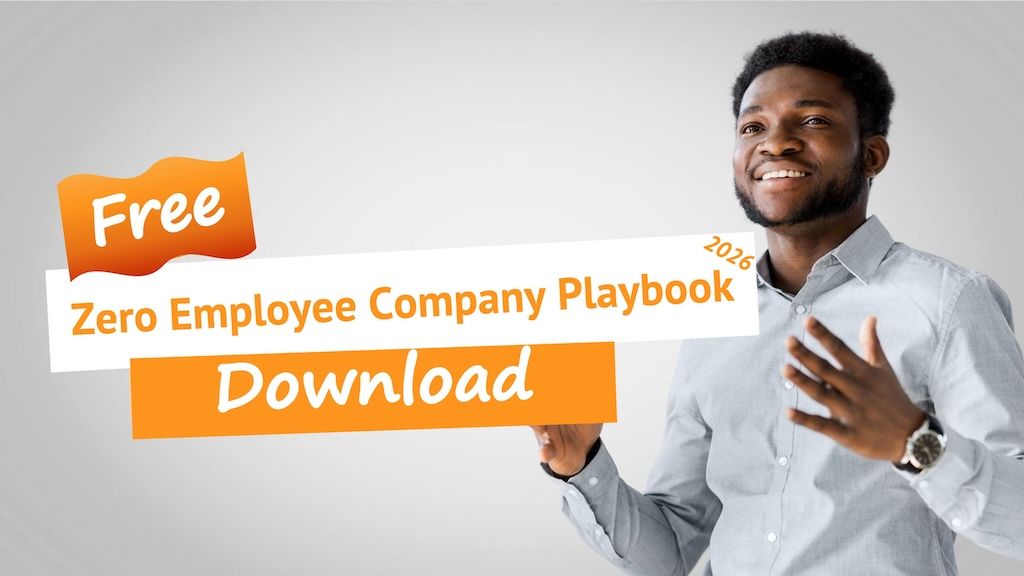
Download our complete execution blueprint: The 2026 Zero-Employee Tech Stack & Execution Manual. Discover how to automate your operational pipeline, secure your margins, and build a lasting moat around your practice.
For experienced founders seeking asymmetric market signals and rigorous peer review, explore our core programs—Garbo Decodes China and The Niche Hunter—or apply for membership in the invite-only Moat Founders Council.
Be the system. Build your SoloMoat.