China’s AI Market Enters the Era of “AI Pricing”: Zhipu AI Surges Past HK$900 Billion as Capital Rewrites Core Asset Hierarchies
Jul 19, 2026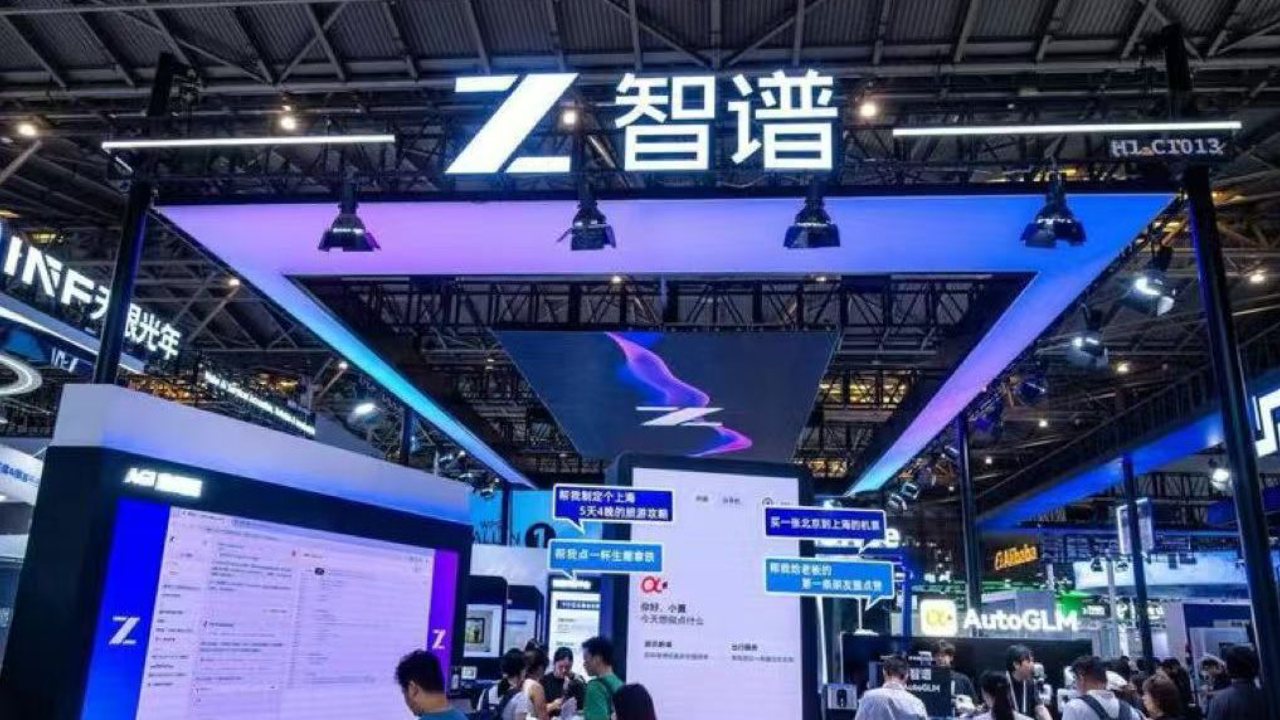
By Garbo Tian
The Milestone: Capital Rewrites the Core Asset Hierarchy
On June 18, 2026, Hong Kong’s equity market marked a milestone moment.
Zhipu AI(2513.HK) surged more than 22% in a single session, pushing its share price above HK$2,038 and lifting its market capitalization past HK$900 billion to a new record high. On the mainland, Cambricon (688256.SH), a leading AI chip designer, rose over 14%, moving within reach of the RMB 1 trillion market cap threshold. Meanwhile, InnoLight Technology and Foxconn Industrial Internet both exceeded RMB 1.5 trillion in valuation, overtaking Kweichow Moutai in the process.
Taken in isolation, these moves would look like standard equity rotations. They are not.
What unfolded is better understood as a repricing of China’s core asset structure for the next decade. Capital markets are redefining, at speed, what constitutes China’s future economic value.
💡 Quick Takeaways: The Dawn of the AI Pricing Regime
- The Structural Shift: The surge of AI stocks is not a narrow sector rotation. It signals China's growth engine moving decisively from land, population, and consumption (e.g., property, baijiu) toward technology, compute, and intelligence.
- The Valuation Paradigm: Markets are reclassifying top-tier AI firms from "software companies" to "intelligence infrastructure." Valuation is no longer anchored solely in current cash flow, but in gateway control over the next decade's digital ecosystem.
1. Capital votes with its feet: compute replaces baijiu
Over the past two decades, China’s capital markets have been organized around a consumption-upgrade thesis.
Property captured urbanization gains. Baijiu embodied consumption upgrading. Banks reflected credit expansion. Despite cyclical rotation, these three pillars consistently occupied the top of China’s asset hierarchy.
That regime is now under pressure.
On June 18, A-share turnover hit a record RMB 3.33 trillion. Yet flows did not rotate into traditional consumption or financials. Instead, capital continued to concentrate in the AI value chain: compute infrastructure, semiconductors, foundation models, optical modules, servers, and data centers.
Kweichow Moutai fell 2%. The compute stack rose broadly.
This is not sector rotation in a narrow sense. It is a reallocation of expectations about where growth will come from.
Markets do not reward the past. They price the future. Moutai represents the consumption cycle of the last two decades. Zhipu, Cambricon, and InnoLight represent the structure of the next.
The underlying shift is clear: China’s growth engine is moving away from land, population, and consumption toward technology, compute, and intelligence.
This session may mark a structural inflection point in Chinese capital markets.
2. Why Zhipu
The question circulating across the market is straightforward: why Zhipu?
On traditional metrics, it does not compete with Tencent, Alibaba, or established consumer champions. Even against global AI leaders, revenue scale is not decisive.
But markets do not price current income. They price positioning within the next decade’s value chain.
In the AI stack, a new hierarchy is forming. At the bottom sits compute and semiconductors. In the middle are foundation models. At the top are applications.
If chips control the compute gateway, foundation models control the intelligence gateway. Zhipu sits near that junction.
Public disclosures suggest its API platform has reached roughly RMB 1.7 billion in annualized revenue, with more than 60x growth over the past year. Model inference costs are declining, while commercialization is accelerating. More importantly, its services now span finance, education, manufacturing, public services, and healthcare.
Zhipu is moving from a model developer to an infrastructure layer for the intelligence economy.
Infrastructure companies are priced differently from software firms.
Software sells products. Platforms sell ecosystems. Infrastructure sells access to future economic activity.
Once the market reclassifies Zhipu from “AI software company” to “intelligence infrastructure,” valuation logic shifts mechanically. The move from roughly HK$50 billion to over HK$900 billion is not a re-rating of current revenue. It is a pricing of gateway value into the next phase of the economy.
| Valuation Dimension | The Legacy Regime (Software/Consumption) | The AI Pricing Regime (Intelligence Infrastructure) |
|---|---|---|
| Core Asset Metric | Priced on current income, balance sheets, and historic cash flow (e.g., Baijiu, traditional SaaS). | Priced on platform position, ecosystem control, and compute orchestration. |
| Value Delivery | Software sells discrete products. Consumer goods sell demographic upgrades. | Infrastructure sells access to future economic activity and the intelligence gateway. |
| The Control Point | User traffic and physical land. | Compute scale, foundational models, and data orchestration. |
3. Wu Qing: policy as catalyst, capital as amplifier
Industrial momentum sets direction. Policy determines speed.
At this year’s Lujiazui Forum, China Securities Regulatory Commission Chairman Wu Qing signaled a key reform: the STAR Market’s fifth listing standard will be extended to AI foundation model companies.
On paper, this is a listing adjustment. In practice, it is a formal recognition of AI as a strategic industry with dedicated capital-market access.
The fifth standard was originally designed for biotech firms—companies with limited or no profits but strong core technology and long development cycles.
AI firms share similar characteristics. Foundation model training, infrastructure build-out, and iteration cycles require sustained capital over long horizons, while profitability is uncertain in the early phase.
By extending this framework to AI, regulators are effectively allowing capital markets to fund long-duration technological bets without forcing premature profitability constraints.
This creates a full-cycle financing structure: venture capital, industrial capital, and public markets aligned around a single innovation pipeline.
Markets respond faster than real economies to policy signals. The rapid re-rating following Wu Qing’s remarks reflects that mechanism.
Zhipu’s rally is therefore not only a company-specific repricing. It is also a directional vote on China’s AI strategy.
4. Who defines the next decade’s core assets
The more important question is not how far Zhipu can rise, but what becomes a core asset over the next decade.
Each industrial revolution rewrites capital hierarchies:
Railroads created railway monopolies. Oil created energy giants. The internet created platform companies. AI will create a new class of systemic firms.
Scarcity has evolved over time: land, then traffic, and now intelligence.
Capital is no longer chasing isolated compute hardware or standalone models. It is competing for control points in the intelligence economy.
Compute determines scale. Algorithms determines capability. Data determines quality. Applications determine value.
Firms that connect all four layers will define the next tier of strategic assets.
Zhipu’s re-rating reflects an early pricing of China’s position in that structure. The market is not saying it already produces HK$900 billion of value. It is pricing optionality in a multi-trillion intelligence ecosystem.
History is often only legible in hindsight.
Zhipu, Cambricon, InnoLight, and Foxconn Industrial Internet are not isolated equity stories. They are nodes in a single industrial architecture.
Cambricon represents domestic AI chip breakthroughs. InnoLight sits in the global optical interconnect layer. Foxconn Industrial Internet anchors AI server manufacturing and hardware infrastructure. Zhipu operates at the model and application layer.
Together, they form a full-stack AI asset map: chips, compute, hardware, models, and applications.
June 18, 2026, is therefore not simply a strong trading day. It is a repricing of China’s equity market narrative.
Baijiu, property, and banks once defined stability. Compute, semiconductors, models, and platforms are beginning to replace them.
China’s capital market is entering what can be called the AI pricing regime.
In this regime, valuation is no longer anchored solely in earnings, balance sheets, or cash flow. It is increasingly driven by platform position, ecosystem control, data access, compute orchestration, and long-term structural leverage.
This transition will be messy. It will generate volatility, excess valuation, and mispricing. That is typical of early industrial cycles.
The real question is not whether Zhipu “deserves” HK$900 billion today. It is whether China’s capital markets can use this cycle to cultivate globally competitive next-generation technology firms.
If Moutai defined consumption-era valuation, and Tencent and Alibaba defined internet-era valuation, then Zhipu, Cambricon, InnoLight, and Foxconn Industrial Internet may become the first credible valuation references of China’s intelligence era.
2026 may ultimately be remembered as the year China’s capital markets formally entered the AI pricing age: not pricing a single stock, but rewriting what counts as a core asset for the next decade.
❓ Frequently Asked Questions
Q: Why is Zhipu AI valued at over HK$900 billion despite lacking the revenue scale of traditional giants?
A: Because capital markets are repricing Zhipu from an "AI software company" to an "intelligence infrastructure" provider. While software sells discrete products, infrastructure sells access to future economic activity. Zhipu's valuation reflects its strategic control point at the intelligence gateway of the emerging AI ecosystem.
Q: What does the "AI Pricing Regime" mean for China's capital markets?
A: It signifies a structural shift where the legacy core assets (property, baijiu, and banks) that defined the consumption era are being replaced. In the AI pricing regime, valuation is driven by compute orchestration, foundational models, and data access, marking the rise of full-stack AI networks as the new economic backbone.
🎓 Deepen Your Strategic Mastery
In the tactical sandboxes of the SOLOMOAT Mini MBAs, we decode the underlying business logic behind global asset strategies and macroeconomic shifts. We teach you how to see through market illusions and navigate the emerging AI pricing regime to capture the next decade's core assets.