The Psychological Map of the AI Solopreneur: Decoding the Emotional Costs of a One-Person Company
Jul 21, 2026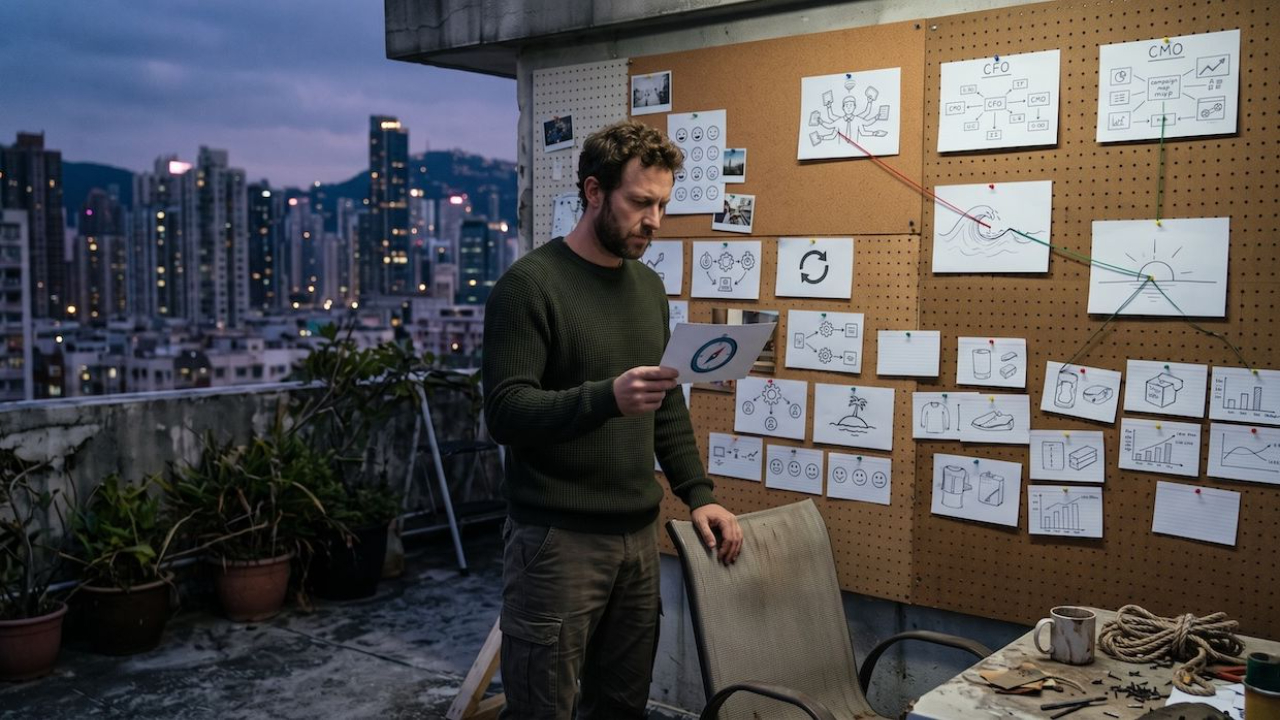
By Garbo Tian
While AI tools have democratized the technical ability to build a One-Person Company (OPC), the psychological infrastructure required to survive remains a profound bottleneck. Based on deep semantic analysis and founder interviews, decision fatigue and structural loneliness have emerged as the most underestimated costs of solo entrepreneurship.
💡 Quick Takeaways: Why the Psychological Map Matters
- The Root Cause: The OPC model structurally eliminates the daily peer feedback loop, forcing founders to carry the cognitive load of a CTO, CMO, CFO, and CS representative simultaneously.
- The Structural Reality: Solo entrepreneurship is not truly isolated labor; successful founders actively build low-coupling social collaboration structures to restore self-efficacy.
1. Beyond Anxiety: The Emotion Intensity Score
Standard word frequency statistics often fail to capture the true mental state of OPC founders. While "anxiety" (11%), "doubt" (8%), and "loneliness" (7%) are the most frequently used explicit labels, founders predominantly use intense metaphorical language to describe their condition. Founders exhibit high self-awareness, inventing precise, high-impact terms for their struggles, such as "drowning," "shattered puzzles," "muscle weakness moments," and "island moments."
To measure this, we developed an Emotion Intensity Score (ranging from 0 to 12) based on semantic weights. A standard word like "anxiety" scores 1 point, but extreme metaphors like "drowning" or "overdrawing life force" score 3 points. The maximum score of 12 was recorded by an early-stage full-time founder experiencing severe burnout, describing a state of "worldview collapse."
2. The Four Stages of Emotional Evolution
The psychological journey is a highly volatile system characterized by distinct qualitative shifts:
| Stage | Core Emotional Characteristic |
|---|---|
| Pre-OPC | Chronic, consumptive anxiety driven by fragmented attention. |
| OPC Transition | Internal struggle; constant fight to maintain original intentions. |
| The Deep Water | Negative accumulation; "stuck" stagnation and worldview collapse. |
| Social Rebalancing | Restoring self-efficacy via low-coupling social collaboration. |
3. Action Checklist: Coping Strategies for Solo Founders
- Practice Cognitive Reframing: 26% of founders utilize reframing. Give your pain a narrative framework; define struggles as "the darkness before dawn" rather than an endpoint.
- Use AI as a "Cognitive Mirror": Break emotional panic into concrete worst-case scenarios and feed them to an AI agent to identify your own cognitive blind spots.
- Acknowledge Structural Isolation: OPC labor is inherently isolating. Do not deny the mental toll; actively seek out founder communities for external calibration.
❓ Frequently Asked Questions
Q: Why is "structural isolation" the biggest bottleneck for an OPC founder?
A: Because the model eliminates the horizontal division of labor and daily peer feedback loops. Founders are left in an "island moment" where they must carry the full cognitive load, making the creation of alternative social support systems a survival necessity, not a luxury.
Q: How do successful OPC founders use AI to manage emotional burnout?
A: They use AI as a "cognitive mirror." By breaking down emotional panic into concrete, manageable tasks and worst-case scenarios, they can externalize their worries and identify cognitive blind spots, preventing the stagnation of the "Deep Water" stage.