
Delegating the Trigger: Why the Front Line Must Call for Fire
Jun 28, 2026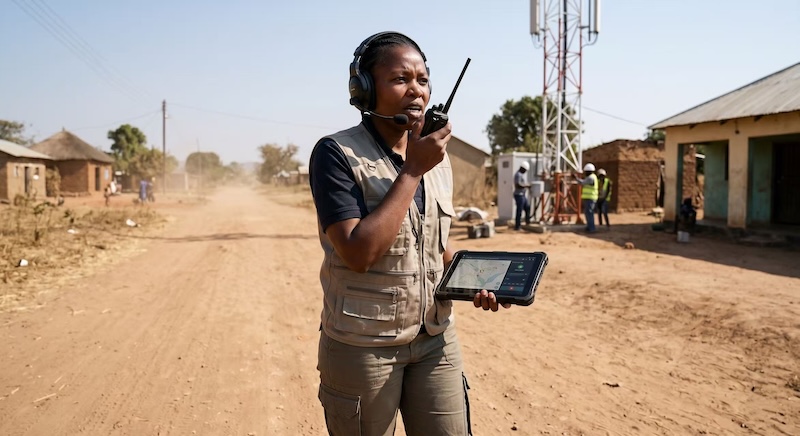
What is Huawei’s "Iron Triangle" strategy? Traditional corporate architectures are defined by vertical silos; Huawei, by contrast, deploys an "Iron Triangle" at the customer front—a trio comprising an Account Manager (AR), a Solution Expert (SR), and a Delivery Expert (FR). This unit functions as a miniature, fully autonomous combat cell, interfacing directly with client demands and requisitioning necessary resources from the rear.
Why is "letting those who hear the gunfire call for fire" the ultimate antidote to multinational expansion? The complexities of global markets far exceed the imagination of headquarters’ mandarins. If front-line units must navigate layers of hierarchy to address localized issues, the tactical window vanishes. Success demands an "inverted triangle" management model, where command and resource allocation are delegated to the soldiers closest to the client.
How to utilize "waste" to secure victory under the law of the jungle? During periods of strategic breakthrough, one eschews the "lean management" of financial orthodoxy in favor of the "Pressure Principle"—concentrating resources and talent on a single point far in excess of the competition. This "saturation attack" accepts short-term financial "waste" as the price for securing long-term market hegemony.
The traditional mode of instruction involves sketching elegant matrix diagrams on a pristine whiteboard: reporting lines here, approval flows there. To the acolytes of the classical MBA, a behemoth with 200,000 employees spanning 170 countries ought to be a rigid, hierarchical machine. Yet to dissect Huawei with such tools is to take a scalpel to a wolf pack in mid-frenzy. The company’s most formidable weapon is not its dominance in 5G patents, but its heretical demolition of corporate architecture. They have upended the pyramid, allowing a salesperson in the African bush or at a European negotiation table to pick up a radio and summon billions in R&D "artillery fire" directly from Shenzhen.
Breaking the Silos: Guerilla Warfare and Rapid Response
For global executives and architects struggling with corporate sclerosis and "big company disease," the war machine known as "Huawei" offers a curriculum written in the smoke of the battlefield.
When an enterprise reaches a certain scale, "big company disease"—defined by headquarters’ arrogance, front-line impotence, and internecine buck-passing—spreads like a cancer. Huawei’s remedy is visceral: it tears the organization into countless lethal "Iron Triangle" combat cells. In the meat-grinder of global competition, a manager in an air-conditioned office can never grasp the terrain as intimately as the sweat-drenched salesman facing the client. Power, therefore, must be violently inverted. The front line is no longer a pawn, but the empire’s sensory cortex and brain; headquarters is demoted to a "servant" providing logistics and ammunition. For the private investor, the metric of a multinational’s resilience is not its count of high-pedigree vice presidents, but the speed with which its front-line units can hammer an opponent with the full weight of corporate resources.
Strategic Alpha
|
The Bureaucratic Trap |
The Tactical Play: The Inverted Pyramid |
The Alpha: Organizational Superiority |
|
Siloed Vertical Management: Sales, R&D, and delivery act in isolation; complex client needs trigger internal friction and buck-passing, leading to high transaction costs and churn. |
Deploy "Iron Triangle" Micro-Combat Units: Break down departmental walls; mandate the integration of client relations, solutions, and delivery experts into a unified, profit-aligned unit. |
Achieve a radical responsiveness that allows the firm to seize core clients from Western incumbents in global markets. |
|
Arrogance and Decision Latency at the Peak: The front line identifies an opportunity, yet must wait for reports to ascend the hierarchy, resulting in foolish decisions made by a distant headquarters. |
"Let Those Who Hear the Gunfire Call for Fire": A total inversion of power. Delegate resource allocation and tactical command to the front line, reducing HQ to a robust support platform. |
Gain a near-savage tactical agility, granting a multinational giant the nimbleness and lethality of a startup. |
|
The Myth of "Financial Lean Management": During critical breakthroughs, being parsimonious for the sake of the balance sheet and attempting to "do more with less." |
The "Pressure Principle" and Saturation Attack: In core battlegrounds, commit resources and personnel tenfold that of the enemy, tolerating tactical "waste" to ensure victory. |
Utilize absolute physical and resource suppression to shatter the opponent's defenses and establish irreversible industry dominance. |
Navigating this cross-border organizational mutation requires something far stronger than tepid management platitudes. In this clandestine war for organizational survival, the SOLOMOAT serves as your premier strategic guide. In the tactical sandboxes of our Mini MBAs, we perform a deep-tissue dissection of the "irregular warfare" that makes the Western commercial world tremble. We do not cultivate bureaucrats who produce polished PowerPoints in greenhouses; we train the commercial warlords who dare to call for fire from the front lines.
(We cordially invite you to join the SOLOMOAT. )