
Green Darwinism: Why Your "Low-Carbon Transition" is Merely Someone Else's Cash Machine
Jun 30, 2026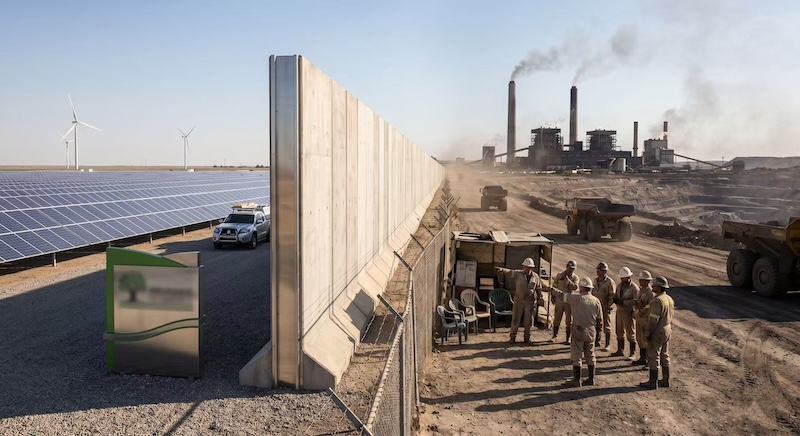
- What is the "Green Privilege Economy"? Green policies—such as carbon taxes and emissions trading—are not measures of absolute, neutral justice. They are emerging as a covert screening mechanism, enriching institutions with financial and technological hegemony while forcing vulnerable firms into crippling compliance debt.
- Why is there "structural collateral damage" in the decarbonization path? Misaligned policy priorities have birthed energy shortages and inflation. Green capital tends to flock to "easily packaged" low-carbon sectors rather than the high-carbon foundational industries that most require technological overhaul, leading to a profound misallocation of funds.
- How is global inequality being exacerbated? By establishing decarbonization standards and green tariffs, developed nations are effectively transforming green thresholds into new barriers for global trade, quietly widening the dual gap in both technology and industry.
Under the spotlights of Davos, "green growth" is depicted as a moral consensus for all humanity, as if capitalism has undergone a sudden conversion the moment it applies an ESG label. Yet, strip away this tender veil of environmentalism, and one finds the ruthless laws of Darwinism. Net zero is never a free moral gift; it is a meticulously engineered machine for the transfer of wealth. While you may gloat over your firm’s inflated green rating, global financial titans have already utilized complex carbon tax mechanisms and green credit to quietly slip a heavy yoke of compliance around your neck.
The Allocation of Survival Under the Guise of Environmentalism
For global professionals and private investors, the greatest blind spot lies in viewing "environmentalism" as pure technical refinement or moral penance. In truth, decarbonization is a cold-blooded reshuffling of global production rights. In this game, workers in high-carbon sectors and small-to-medium exporters in the developing world are being remorselessly squeezed out of existence, while the green capital that dictates the standards engages in a frenzy of arbitrage. If you fail to see through this "green privilege," your assets will be surgically liquidated, becoming mere sacrifices in this great energy transition.
Strategic Alpha
|
Green Transition Blind Spots |
The Reconstruction of Commercial Reality |
Hedging and Arbitrage Strategy |
|
Fetishizing the Moral Dividend |
Green policies are essentially the "internalization of externalities"; firms lacking technical reserves will be crushed by compliance debt. |
Divest from "Green Disadvantage" Assets: Rapidly audit your supply chain to prune links that, under soaring future carbon costs, will utterly lose their premium power and ability to pass on costs. |
|
Blind Misallocation of Capital |
Capital favors "high-scoring, well-packaged" asset-light projects, leading to credit being cut off for high-carbon industries in genuine pain. |
Seek Hard-Core Transition Technologies: Do not blindly follow pure-concept ESG hype; invest in transitional technologies and infrastructure that can tangibly solve the pain points of traditional high-carbon foundational industries. |
|
Ignoring Social Friction |
A severe lack of supporting skill transfers is forcing the displacement of workers in high-carbon roles, triggering deep structural unemployment and social upheaval. |
Reset Labor Expectations: Within corporate transitions, reserve sufficient "talent reshaping buffers" to avoid organizational collapse and supply chain ruptures caused by aggressive decarbonization. |
In the face of such systemic global inequality, blindly following the green narrative of the mainstream media is perilous. A core mission of the SOLOMOAT is to help you pierce this moral fog. Through the foundational logic of our Mini MBAs, we teach you to decouple emotion—as the top investment banks do—and deconstruct the climate challenge as a cold game of balance sheets and risk management.
Saving the planet is noble, to be sure. But before opening your purse, ensure you are not the collateral price of someone else’s salvation.