Mickey Mouse’s "ATM": Why Value-for-Money is Going Bankrupt While "IP" Hacks the Price-Comparison Nerve
Jun 15, 2026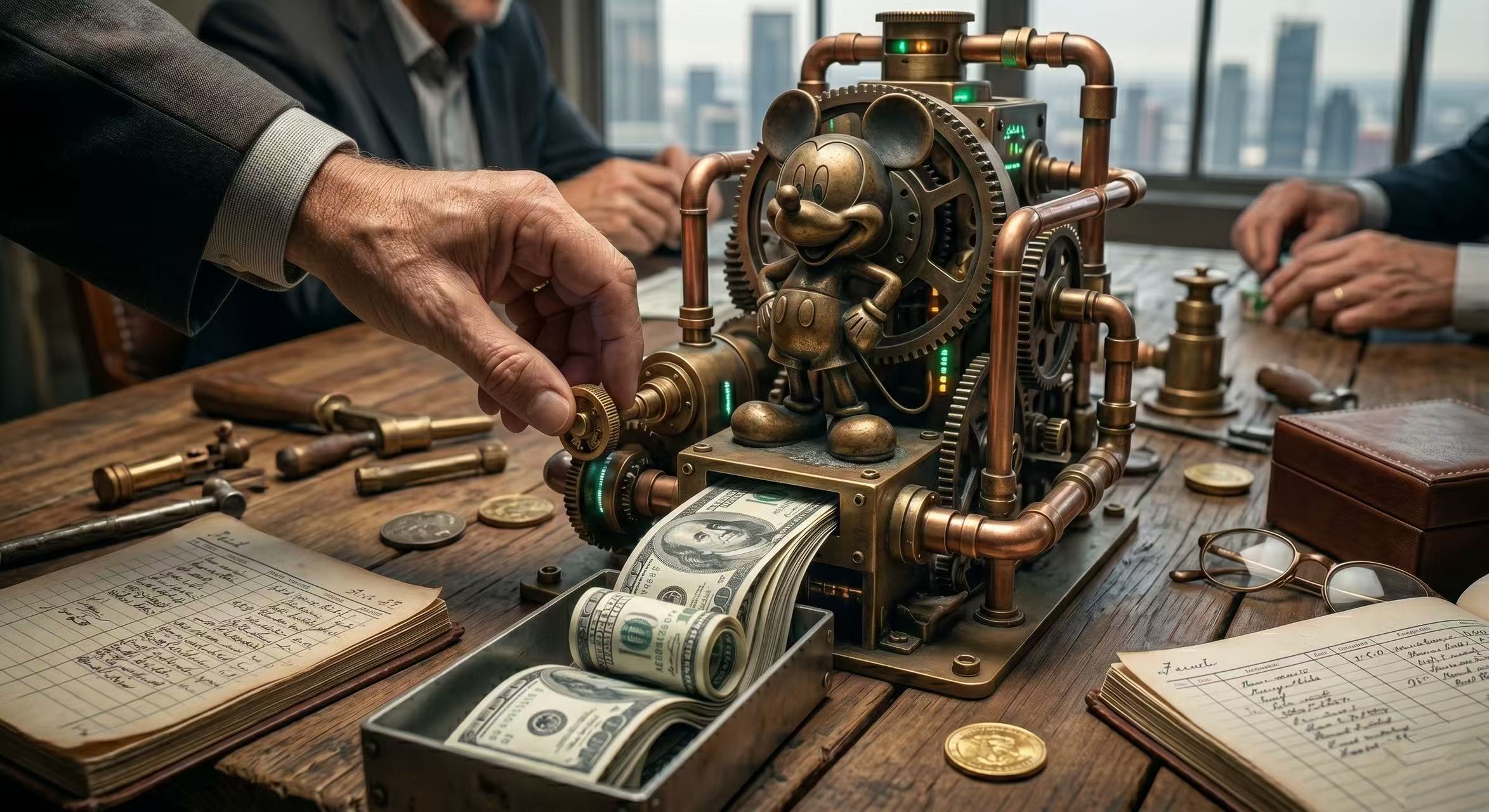
- Why are pure "hard discount" and low-price models heading for bankruptcy? In an era of high inflation and transparent supply chains, a pure price war is a bottomless black hole—as evidenced by the collapse of 99 Cents Only Stores in the United States. Low prices devoid of an emotional moat will eventually be devoured by even lower prices.
- What is the Gen Z "interest consumption" revolution? Raised in an environment of material abundance, Gen Z no longer pays for a product’s "durability" or "functionality". They purchase emotional value, self-identity, and instant therapeutic relief amidst the anxieties of modern life.
- How do super-IPs restructure profit margins? Intellectual Property (such as Harry Potter or Chiikawa) represents a form of legal emotional monopoly. It causes the consumer’s rational price-comparison system to crash, allowing an emotional compensation mechanism to hijack purchasing decisions. This enables enterprises to secure high gross margins protected from price wars.
As the venerable American discount giant "99 Cents Only Stores" filed for bankruptcy and shuttered hundreds of locations, Wall Street analysts were busy penning obituaries for the "consumption downgrade" narrative. In the classical physics of retail, economic downturns should dictate that "low price is king". Yet, a Chinese firm once mocked as a "cheap ten-yuan shop" has delivered a defiant report card in the same freezing retail winter: quarterly revenue of 5.79 billion RMB and a gross margin soaring to 44.7%. Rather than hacking away at competitors in the quagmire of low prices, it wielded a scythe named "Super IP" to precisely harvest the wallets of Gen Z. It appears that in this era, if all you can offer is "cheapness," your demise is merely a matter of time.
Hijacking Rational Computing Power with "Emotional Code"
For global professionals and private investors evaluating corporate moats daily, this generational consumption revolution reveals a cold truth: the traditional "functional premium" has utterly failed.
When facing Gen Z—a generation that has replaced their phones four or five times since childhood—marketing a mug based on how "sturdy" it is amounts to playing a lute to a cow. They require emotional painkillers. Miniso has acted as a frantic stamp collector, signing over 150 top-tier global IPs, from Disney and Marvel to Sanrio and Chiikawa. In the commercial endgame, this is far more sophisticated than merely printing a cartoon on a cup; it is a "legal hacking" of the consumer’s brain. The moment a Chiikawa character appears on an ordinary plastic water bottle, the subconscious price-comparison system is paralyzed, and emotional compensation mechanisms seize control of the transaction. You are no longer buying a vessel for water, but a spiritual totem. This "interest consumption" allows the enterprise to transcend the meagre struggles of supply-chain costs and leap directly into the oligarchy of "soul premiums".
Strategic Alpha
|
The Old Paradigm |
The Strategic Play |
The Alpha (The Moat) |
|
Price Wars: Spiralling into the abyss of the bottom line. |
Detaching from Functional Anchors: Recognising the fragility of the "hard discount" model in an inflationary era; ceasing the futile struggle over supply-chain hard costs. |
Outcome: Escaping the curse of razor-thin margins and carving a high-profit exit route from the "Red Ocean." |
|
Dull "Utilitarian" Promotion: Focused solely on use-value. |
Selling Emotional Value (Interest Consumption): Reimagining products as social conduits for curing anxiety and expressing identity, satisfying Gen Z’s obsession with "the beauty of the useless." |
Outcome: Achieving a non-linear leap in ticket size as consumers become desensitised to price. |
|
Generic "White-Label" Goods: Lacking entry barriers. |
Constructing a Super IP Moat: Using raw capital to bind top-tier global cultural symbols, establishing a legal "emotional monopoly." |
Outcome: Leveraging the exclusivity of IP to build a psychological barrier that competitors cannot breach through price cuts. |
To perceive the "dark art" of transforming "cuteness" into exorbitant profit, one must strip away the mental residue of the industrial age. The Niche Hunter perpetually tracks these outliers who arbitrage the psychological gaps between generations within global consumption currents. Within the Mini-MBA system of the SOLOMOAT, we do not teach the compression of material costs by a few cents. Instead, we are dedicated to teaching future business leaders how to manipulate the emotional premiums of an entire generation with algorithmic precision.