OPC Boom: 15,700 New “One-Person Companies” a Day. But Who Is Actually Making Money?
Jul 27, 2026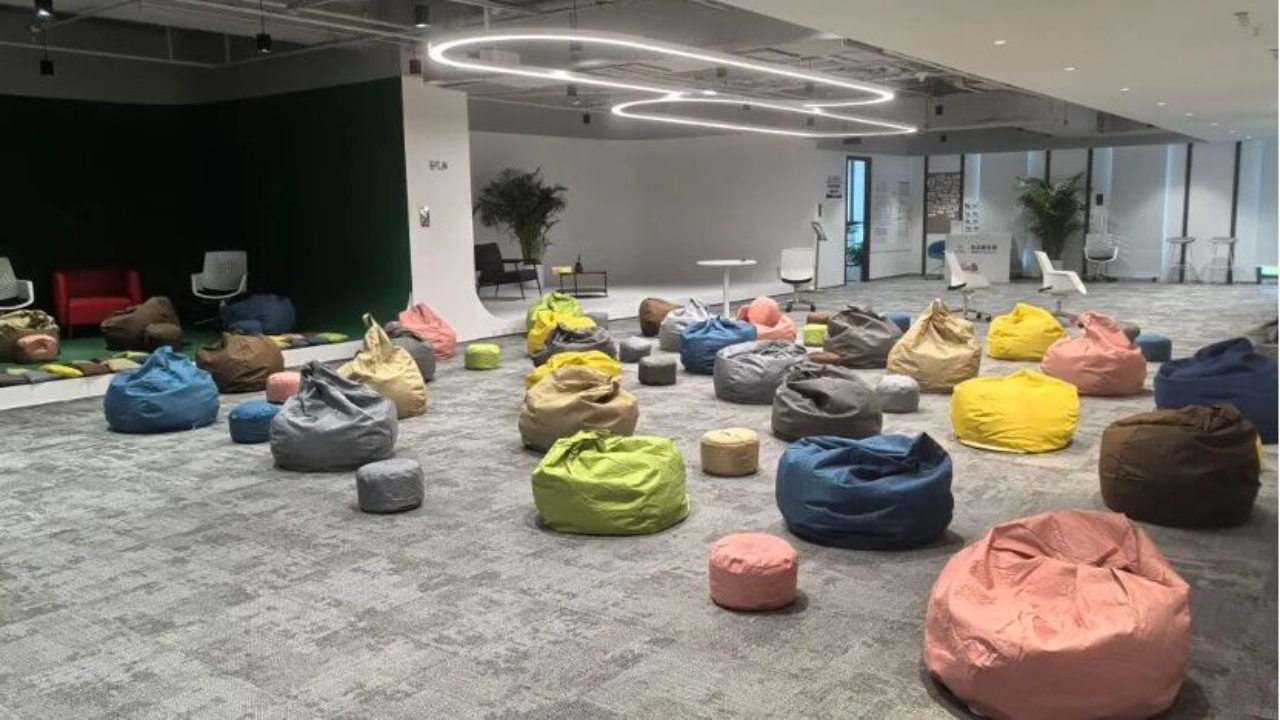
By Mei Ling
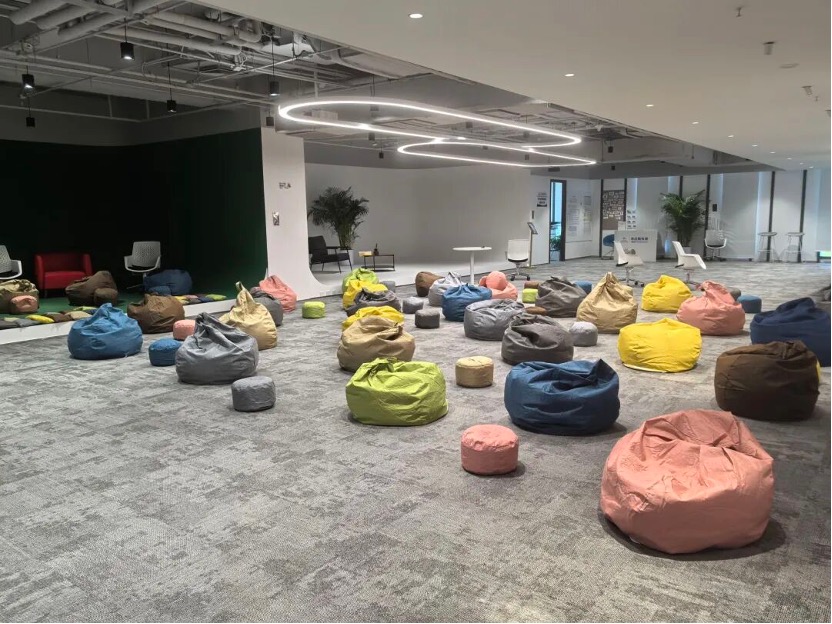
Inside the “Modular OPC Community,” a large share of founders are heavy AI users who routinely exchange ideas in shared workspaces. (Photo by Mei Ling / Southern Weekly)
- In 2025, China added an average of 15,700 newly registered one-person companies (OPCs) per day.
- “What used to take 30 minutes now takes minutes. If I refuse to use this tool myself, why should anyone buy it from me?”
- “Is it a bubble? It doesn’t look like one—but it also doesn’t not look like one.”
💡 Core Strategic Takeaway: The Reality of the OPC Boom
- The Collapse of Execution Costs: With AI agents handling coding, logic, and workflow, a single founder can replace an entire functional team. Building a product is no longer the bottleneck.
- The Commercialization Trap: Despite massive registration numbers and government subsidies, pure technical arbitrage is failing to monetize. The true defensible moats remain industry understanding, client relationships, and delivery quality.
1. “I can replace myself with AI”
Every morning at 8 a.m., Sun Shaocong starts his day by opening his laptop and typing a single line:
“Good morning, Monica.”
Monica is a digital employee he built using Claude Code, a terminal-based AI coding agent. With its help, Sun founded Beijing Shaocong Zeming Intelligent Technology Co., Ltd. in March 2026.
In his company, Sun is the only shareholder, legal representative, finance manager, sales lead, logistics operator, and developer. He breaks down product requirements and hands them to AI agents, which help process information, track workflows, organize files, and execute tool calls. Final decisions remain with him.
This emerging labor structure—where a single founder operates alongside AI agents—is now referred to as a One-Person Company (OPC).
In 2024, OpenAI co-founder Sam Altman suggested that “in the AI era, one person may be able to build a billion-dollar unicorn.” In China, the OPC wave began accelerating in the second half of 2025 and intensified further in 2026.
According to data provided by one interviewee, the cost of hiring an AI “employee” is only 1.8% of a mid-level software engineer’s salary. In 2025, China saw an average of 15,700 new OPC registrations per day. At first glance, the economics appear compelling. But can these companies actually generate revenue?
From sales manager to solo operator
Sun, 39, spent 15 years at the China subsidiary of a top-tier European industrial electrical conglomerate, rising from intern to key account sales manager without changing jobs.
In August 2025, his son was born. That same month, OpenAI released GPT-5, merging large language and reasoning models into what many saw as a shift from “college-level intelligence” to “expert-level capability.” At the end of the month, China released the State Council’s policy on advancing the “AI+” initiative, aimed at removing bottlenecks in real-world adoption.
At the time, Sun’s understanding of AI was still conventional: “just a slightly smarter search engine.”
His industry is defined by precision. As a salesperson, he repeatedly matched clients with products: parsing technical parameters, searching hundreds of pages of manuals, checking inventory across systems, finding substitutes when stock was unavailable, calculating discounts, and producing quotations—followed by endless negotiation loops.
The process tolerated no error. It was tedious and fragmented. He once wondered whether automation could solve it, but lacked both technical skills and capital.
Three months after his son was born, the open-source agent project OpenClaw emerged. Shortly after, major Chinese tech firms entered the field with products such as Tencent WorkBuddy, Alibaba CoPaw, and ByteDance ArkClaw.
Sun had heard of OpenClaw but avoided it—concerned about data security and unsure why AI required payment at all. That changed in March 2026. One Friday night, he began asking AI practical questions: how to “raise lobsters,” and whether workplace inefficiencies could be solved with AI.
Instead of giving direct answers, the system guided him: define the real scenario, specify inputs, clarify outputs. His vague ideas began turning into structured workflows. “That moment felt like touching the boundary of productivity,” he said. Even months later, he recalls the physical sensation.
He is not a programmer, but he understands real operational bottlenecks. AI did not replace judgment; it removed technical friction. He compared his previous working life to smashing nuts with stones—inefficient but habitual. AI, he said, is closer to the arrival of the steam engine: something that can be connected to existing workflows to automate repetitive effort.
“I can build an AI employee to replace myself.”
That night, he did not sleep. He spoke with AI for 26 consecutive hours, driven by urgency rather than fatigue. He began restructuring years of fragmented workflows in industrial electrical sales—turning selection tables, pricing systems, inventory checks, substitution logic, and quotation generation into data-driven processes that AI could execute alongside software tools.
A core realization followed:
“If a task that used to take 30 minutes can now be done in minutes, and I wouldn’t use this tool myself, why would anyone else buy it?”
He also saw potential to replicate this “digital employee” model across education, training, and short-form scripted video industries.
2. The “externalized team”
After three months, revenue remained zero. Sun said there were clear purchase intentions, but the product was still under refinement. He has not detached from his original industry; instead, he is building from within it.
From the start, he set one rule: no spending. For company registration questions, he used free AI tools such as Doubao as his advisor: compliance, legal structure, shareholder roles, and registered address.
While registering, he discovered the Modular OPC Community in Beijing E-Town’s National Trustworthy Computing Park, located about 20 km southeast of Tiananmen Square. It officially opened in April 2026. Beijing now hosts 11 such OPC communities; nationwide, there are 426 as of May 2026.
The community is operated by Way to AGI, founded by AJ, who communicates through multiple AI-generated personas on WeChat. After several attempts, the reporter obtained her personal account.
“The core of OPC is that one person, combined with AI and external collaboration networks, can complete what used to require a small team,” she said.
OPC founders often face compressed timelines: register a company in the morning, secure model resources at noon, pitch clients in the afternoon, and deliver demos at night. The community functions as an externalized team, offering incorporation services, accounting, legal support, computing resources, tools, client matching, delivery assistance, and peer collaboration. Sun received help at nearly every step.
3. Inside the OPC workspace
In mid-June 2026, the reporter visited the Modular OPC Community.
By 9 a.m., the café was already full. Founders worked alone—some pitching products in English over video calls, others typing while simultaneously conversing with AI systems. The complex spans roughly 3,000 square meters. A grey eight-story building displays slogans such as “empowered by AI.” Inside, screens loop videos about AI-driven productivity. The phrase “More people empowered on the path to AGI” dominates the lobby.
Sun likes the environment. In his previous corporate life, he worked with older colleagues and clients in a stable industrial system. Here, most founders are from the post-2000 generation, each building entirely different products.
His company occupies a single desk. His product focuses on digitizing industrial electrical workflows. Around him, others build AI tools for children’s English education, multi-dimensional spreadsheet automation, toy design, vehicle diagnostics, and large-scale AI video generation. All are different industries, but all are heavy AI users.
The community currently charges no fees. According to operators, the real cost is not money but time spent experimenting and learning.
Local governments also provide support: Shanghai Yangpu offers subsidized housing; Jinan includes OPC founders in talent programs; and other cities provide housing subsidies and financial incentives. A community operator said funding partly comes from government programs. Beijing can allocate up to 2 million yuan for high-performing OPC communities. Hangzhou has established a 1 billion yuan annual fund plus a 10 billion yuan OPC industrial fund.
According to Renmin University professor Zhou Guangsu, such policies serve two goals: employment generation and the repurposing of vacant office assets. Despite policy support, many founders argue the real bottleneck is not funding but commercialization and profitability.
4. “No one is making money”
Do OPC founders actually earn money under heavily subsidized conditions? The answer, at least for now, is largely no.
AJ outlined typical monthly costs:
- Light SaaS or consulting OPC: RMB 1,000–5,000/month
- Product development OPC: RMB 10,000–30,000/month
- Compute-heavy AI video or hardware projects: RMB 30,000–100,000+/month
Sun works on the second floor. Above him is Zhang Shunchuang, founder of Beijing AIA Technology, a four-person AI video generation startup. Despite their youth, this generation understands AI and OPC dynamics more deeply than traditional founders, who tend to focus on legacy demand discovery.
Zhang’s first exposure to AI came from Terminator, the sci-fi film about an AI system called Skynet. After dropping out of college, he worked in gaming, failed startups, and raised RMB 2 million in 2020, which was burned within six months due to premature ideas.
After ChatGPT’s release in 2022, he rebuilt multiple AI products, including workflow-based app builders, cross-border e-commerce image generation tools, and customer service systems. In 2026, a casual remark about short dramas led his team to pivot into AI video generation tools. Within months, their open-source tool reached over 6,000 users.
Yet neither Sun nor Zhang is profitable. Zhang said bluntly: “It’s not time to talk about profit yet.” He uses revenue from earlier ventures to subsidize current development.
He describes many OPC founders as “gig workers with AI,” improving productivity and selling output—but struggling to build defensible advantages. “The real barrier is not AI,” he said. “It’s industry understanding, client relationships, and delivery quality.”
AJ agrees: OPC reduces experimentation costs, but does not replace judgment, trust, or responsibility.
5. “I rejected multiple funding offers”
From an external view, most OPC founders are self-funded. Venture investors remain skeptical: token costs are high, but business models are often unclear.
Yet Zhang has rejected several funding offers. “Not because I can’t raise money,” he said, “but because I don’t need to.”
The traditional startup model—pitch decks, fundraising, product development after capital injection—is being inverted. Now founders build first, ship first, and only later consider funding. “AI allows us to deliver before raising money,” Zhang said.
| Dimension | Traditional Venture Model | The OPC Native Model |
|---|---|---|
| The Capital Cycle | Pitch → Fundraise → Build Team → Develop. Reliant on early capital injection to exist. | Build → Ship → Monetize → Fundraise (Optional). AI enables delivery before capital. |
| Organizational Scale | Requires ~20 employees to build and scale minimum viable products. | A single founder (or 3-4 person team) equipped with agents can match output limits. |
| Core Competency | Technical execution and capital acquisition. | Domain expertise, client trust, and delivery responsibility. |
The OPC model compresses organizational scale. A four-person team can now execute what previously required twenty. This changes capital requirements fundamentally.
Wang Jiahao, a partner at Honghub Hub Community in Hangzhou, agrees. He argues that the Silicon Valley–Wall Street “tech-finance loop” is breaking down under AI conditions. In the past, venture capital followed a predictable cycle: invest early, scale fast, exit. But AI-native companies with 3–5 people and scalable automation no longer fit that model.
Still, valuation frameworks remain unclear. Investors evaluate OPCs based on market maturity, product completeness, and founder capability. Can OPCs be profitable?
Wang cites a striking imbalance: global AI infrastructure investment is around $700 billion per year, while AI-generated revenue is still under $100 billion. Chip depreciation cycles have shortened from six years to as little as three. Yet AI adoption is growing at 300% to 1,000% annually.
“Is it a bubble? Not really—but it doesn’t look stable either,” he said.
6. “A bubble that is not a bubble”
Sun remains cautiously optimistic. AI has lowered barriers to entry for product creation.
He has developed a habit of using AI in everyday life: children’s English learning tools, shared expense trackers, and office spreadsheets—all converted into “throwaway micro-apps.” He calls them “disposable handcrafted apps.”
“These don’t always monetize,” he said. “But they feel like I’m picking up small pieces of value from real life.”
❓ Frequently Asked Questions
Q: How does a One-Person Company (OPC) operate differently from a traditional freelancer?
A: A traditional freelancer trades time for money. An OPC acts as a systems orchestrator, building an "externalized team" of AI agents (like Claude Code) and leveraging subsidized startup communities to create scalable products without adding payroll friction.
Q: Why are many AI-native OPCs struggling to achieve profitability?
A: Because AI drastically lowered the barrier to technical execution, creating a flood of competing tools. The real commercial moat is no longer coding; it is profound industry insight, established client relationships, and the ability to guarantee delivery quality—elements AI cannot fully automate.
🎓 Deepen Your Strategic Mastery
Are you ready to escape the "technical arbitrage trap" and build a genuinely profitable, defensible business? In the SOLOMOAT Mini MBAs, we decode the precise commercialization frameworks, AI toolchains, and strategic client acquisition models required to transition from a subsidized experiment to a scalable One-Person Company.