
Architecting the "Production-Routing-Consumption" Ecosystem in the Token Era
Jul 31, 2026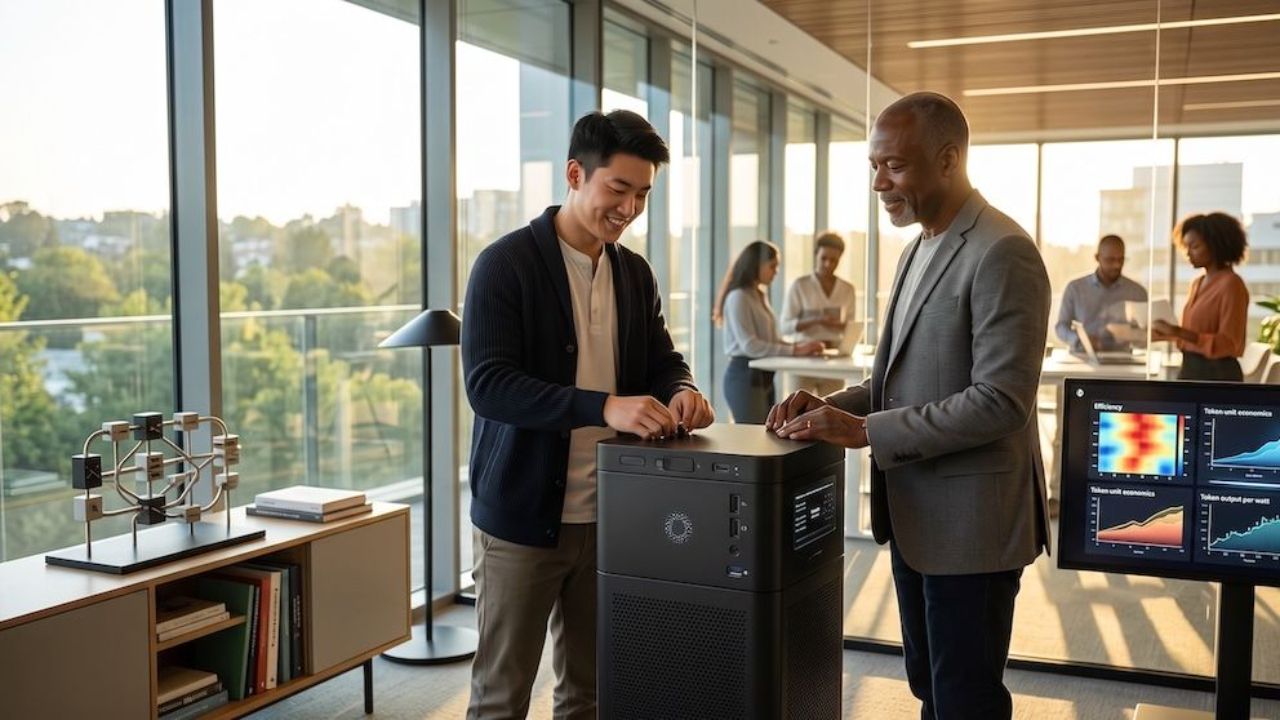
By Garbo Tian
The traditional computing paradigm built on isolated "Cloud-Edge-Device" frameworks is undergoing a historic reorganization. According to the Token-Driven Smart Economy Research Report published by the China Academy of Industrial Internet (CAII), the global AI sector is rapidly consolidating around an agile, highly integrated three-tier industrial ecosystem: Production Supply, Routing & Distribution, and Pervasive Consumption.
This grid decouples high-overhead infrastructure costs from final business delivery, transforming raw data into an adaptive network driven by Token mobility.
1. TOKEN FACTORIES (Production): Converts raw energy (WATT) into compute (FLOPS)
2. TOKEN HUBS & ROUTERS (Distribution): Utilizes TDN networks to optimize cross-region flows
3. SYSTEM APPLICATION (Consumption): Deploys AI Agents across B2B and hardware spaces
💡 Core Strategic Takeaway: The WATT-to-VALUES Chain
- The Core Formula: High-margin business execution requires understanding the complete structural value conversion chain: Energy (WATT) is converted into effective compute (FLOPS), which is processed via data models into high-density Tokens, and finally embedded into live enterprise operations to generate real business value (Values).
- The Efficiency Benchmark: Buying server racks does not automatically equal productivity. The primary index for modern digital infrastructure maturity is the end-to-end conversion efficiency from raw energy input to final operational output.
1. The Bottom Layer: Dedicated "Token Factories"
Modern 智算 (intelligent computing) data hubs have evolved beyond simple data storage warehouses; they function as 24/7 continuous industrial Token Factories. The commercial value of a modern server facility is no longer judged solely by its raw size, but by its comprehensive Token unit economics. This optimization includes metrics like Token output per dollar spent, Token output per watt of power consumed, and peak concurrent Token throughput per second.
To satisfy high-frequency business scenarios across global markets while maintaining absolute data sovereignty, an integrated, three-dimensional factory footprint has materialized:
| Factory Tier | Deployment Strategy | Core Operational Function |
|---|---|---|
| Centralized Super-Factories | Positioned in remote, energy-rich regions to harness low-cost renewable power (hydro, wind, and solar). | Focuses on large-scale batch processing and generic foundational model inference. |
| Regional Edge Factories | Distributed closer to industrial hubs to minimize network latency. | Handles medium-scale sector model operations for rapid municipal or regional updates. |
| Local On-Premise Micro-Factories | Low-noise, plug-and-play hardware arrays deployed directly inside corporate offices or factory floors. | Provides absolute physical data isolation so that sensitive enterprise data never leaves the corporate boundary. |
2. The Middle Layer: Token Distribution Hubs & TDN Smart Routing
Just as the early internet relied on Content Delivery Networks (CDNs) to optimize media delivery, the modern smart economy relies on Token Delivery Networks (TDNs) to manage intelligent computing traffic.
Operating beneath a macro governance framework, regional and international Token Hubs use TDN systems to execute high-volume concurrent processing, sub-millisecond failovers, and transparent multi-source transaction matchmaking:
- Cross-Model Routing: The network systematically balances requests between separate models. Lightweight tasks are automatically directed to compact, low-cost edge models to save capital. Complex, high-stakes tasks are dynamically routed to high-parameter foundational engines, executing multi-step checks to guarantee reliability.
- The Digital Customs Model: Specialized international gateway hubs (Token Export Hubs) use data bond initiatives to run secure "Data Processing" loops. Foreign data flows in through isolated digital channels, runs through local high-efficiency inference arrays, and the final Token results are securely transmitted back to international clients. This setup effectively navigates cross-border compliance barriers while leveraging local green energy advantages.
3. The Top Layer: Pervasive Consumption Across Software and Hardware
At the consumption tier, the metric has moved far beyond basic, manual API integration. Autonomous AI Agents are transforming how digital value is distributed across two primary spaces:
The Next-Gen Software Paradigm
Traditional software architecture is transitioning from rigid, hardcoded, linear task sequences to fluid, Token-driven asset loops. Using open orchestration systems (like OpenClaw or Hermes), modular agents can automatically interpret user intentions, dynamically call external system APIs, and automatically settle transaction overhead using standardized Token metrics.
Hardware & The Device-Side Wave
A highly profitable shift is happening as traditional consumer and industrial hardware manufacturers transition into a "Hardware-as-a-Gateway, Token-as-a-Subscription" business model.
- Smart Consumer Devices: Multi-modal AI wearables, smart glasses, and educational hardware generate high-frequency, continuous Token interactions.
- Robotics-as-a-Service (RaaS): Industrial mechanical arms, automated shipping pods, and vision-guided inspection drones act as full-time autonomous Token consumers, working 24/7 without human fatigue.
Strategic Blueprint for Infrastructure Integrators
- Diversify Your Computing Architecture: Deploy a balanced, three-dimensional setup combining centralized factories for heavy background batch work with secure, local micro-factories for sensitive, real-time local workloads.
- Integrate an Intelligent TDN Router: Implement automated routing protocols to automatically parse task complexity, directing low-stakes queries to small models and reserving premium large model capacity for complex logic.
- Productize Your Hardware Loop: If you produce physical machinery or consumer electronics, embed lightweight edge models to convert single upfront hardware sales into a stream of recurring service revenue.
Strategic Summary
The smart economy cannot operate on top of fragmented, legacy IT architectures. By establishing a highly structured "Production-Routing-Consumption" workflow, your organization can significantly lower operational friction, isolate data risks, and capture recurring value across every layer of the modern digital landscape.
🎓 Deepen Your Strategic Mastery
Ready to stop operating on legacy IT models? In the SOLOMOAT Mini MBAs, we decode the precise AI tokenization strategies, TDN routing frameworks, and systemized workflows you need to build a highly profitable digital enterprise.