The Rise of the One-Person Company: Beijing’s Unprecedented Experiment in AI Entrepreneurship
Jul 29, 2026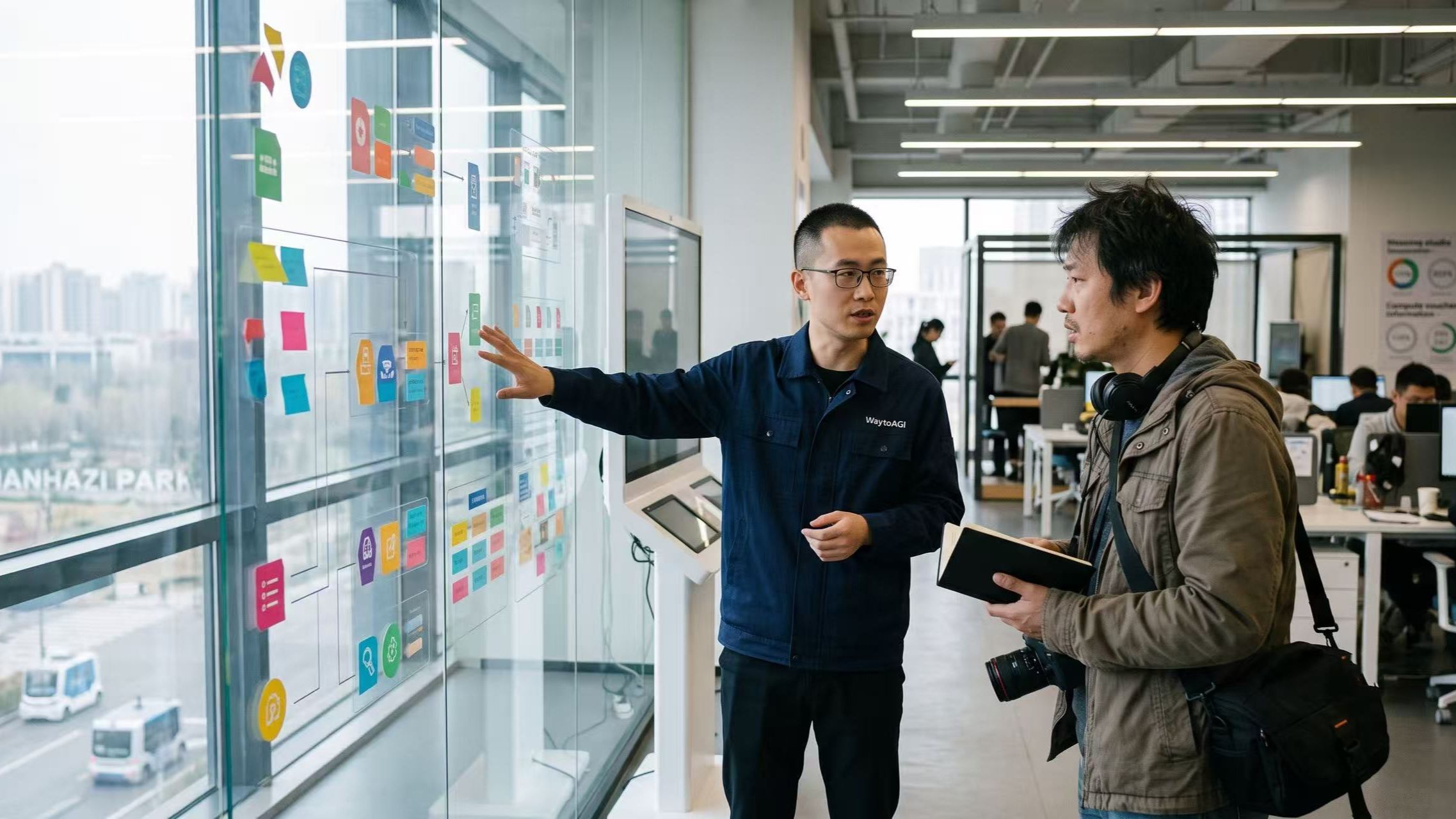
By Garbo Tian
As artificial intelligence accelerates its diffusion across the economy, the “One-Person Company” (OPC) is entering a phase of rapid expansion in 2026. An OPC refers to a business model in which a single individual, leveraging AI tools, completes the entire commercial loop—from product design and R&D to market deployment—effectively operating as a fully self-contained enterprise. The model is reshaping the startup landscape, injecting new momentum into individual entrepreneurship and broader economic activity.
Earlier this month, the “AI FUTURE” conference held in Beijing’s Yizhuang district offered a public window into how OPCs operate in practice.
💡 Core Strategic Takeaway: The OPC Sandbox
- The Dissolution of Overhead: By providing subsidized compute, physical space, and modular order-matching, specialized communities are removing the massive fixed-cost friction that traditionally burdened early-stage startups.
- The City as an Operating System: Beijing's Yizhuang district has transitioned from offering isolated testing zones to executing a "full-domain scenario opening"—turning entire urban systems into a real-world laboratory for AI super-individuals.
1. One person, one company
In the exhibition hall, a pattern quickly became visible. Many participating teams consisted of just one or two people, yet they were producing AI-generated short films that circulated widely online or building practical AI tools used at scale.
They are known as “One-Person Companies,” or, in more current terminology, “super individuals.”
The conference provided them with a stage. But the more pressing question is what sustains their daily operations—office infrastructure, client acquisition, and production capacity.
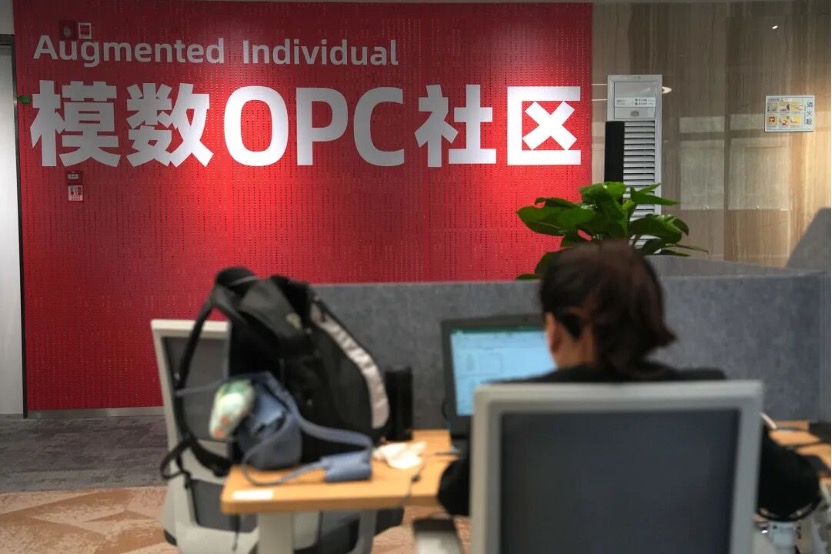
A short distance from the venue, China’s first full-cycle service hub dedicated to OPCs has quietly gone into operation: the Modular OPC Community (One Person Company Community). It is designed as a testbed for this emerging organizational form.
Inside an unremarkable building, around 20 OPCs are housed. Founders include directors, programmers, designers, and even university students. Yet each operates with the potential to reach million-scale markets.
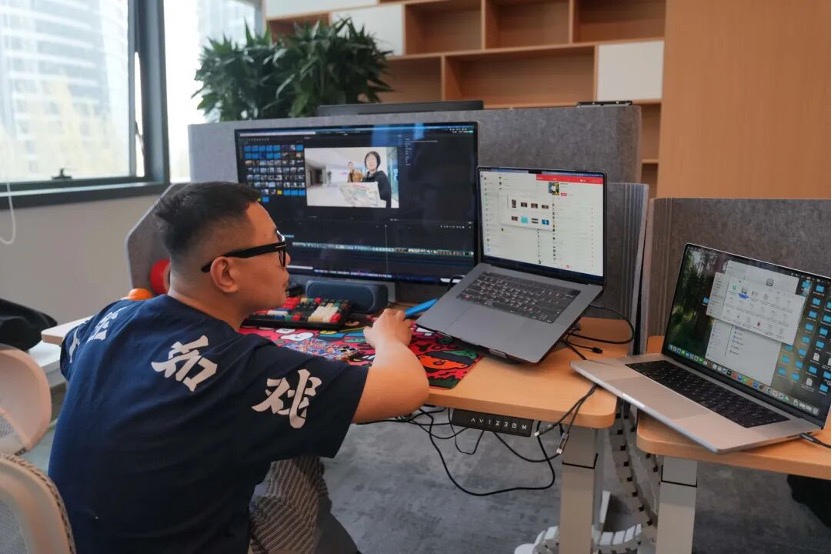
One resident founder, Ding Yi of “Artistic Vision,” originally worked as a documentary filmmaker. Last year, his AI-produced short film Cyber Peng Ge surpassed one million online views and was shortlisted for the Busan International Film Festival.
“In the past, working solo meant constant constraints—locations, equipment, computing power,” he said. “Now the community provides furnished apartments, free studio space, and compute vouchers. I no longer have to pay out of pocket to rent servers for AI effects work.”
2. Not a landlord, but a connector and accelerator

What gives founders greater confidence is the community’s order-matching mechanism. The operator, WaytoAGI, connects large enterprises with OPCs by decomposing complex commercial projects into modular tasks and distributing them across individuals, while also providing credit endorsement.
“We are not a landlord. We are a connector and accelerator,” said Zhou Peng, the community’s operations lead. “What OPCs lack is not space, but orders, trust, and a collaboration network. Each year, we bring in more than 100 high-quality projects and build a talent pool of AI super individuals, matching compute, capital, and application scenarios. A single person can now handle large-scale contracts.”
Beijing E-Town has committed substantial public resources to the model. Annual allocations include up to RMB 3 billion in compute, data, and model vouchers. OPCs recognized as “Yicheng Leading Talent” can receive up to RMB 500,000 in incentives over three years. Housing support includes three months of free rent and a 75% rent reduction in the first year.
So far, the community has attracted 20 high-quality OPC teams, including the Nine Blocks studio, known for the viral AI IP “Zhu Niuma.”
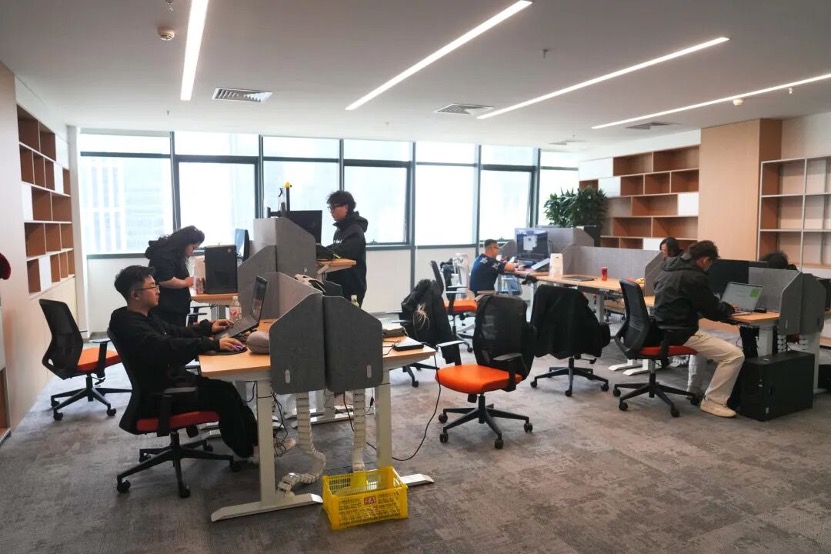
In Yizhuang, Beijing, this small-scale, high-flexibility economic form is gaining momentum. Entrepreneurship is no longer defined by office leasing, headcount expansion, or large financing rounds. It can now begin with one person, one computer, or even a single idea.
| Vulnerability of Solo Founders | The Yizhuang Community Solution |
|---|---|
| Compute & Infrastructure Constraints | Provides furnished apartments, free studio space, and heavily subsidized data and compute vouchers (up to 3 billion RMB allocated annually). |
| Lack of Corporate Trust & B2B Orders | Functions as a "connector and accelerator," leveraging community credit endorsement to break down large enterprise projects into modular tasks for OPCs. |
| Isolation & Scaling Barriers | Builds a concentrated talent pool of AI super-individuals, creating an ad-hoc, hyper-flexible collaboration network without payroll friction. |
3. The entire city as an AI open laboratory
The conference and the OPC community represent only a fragment of Yizhuang’s broader artificial intelligence strategy. The district now hosts more than 600 core AI companies, with total industry scale exceeding RMB 80 billion. Beijing’s largest public computing platform has been deployed here, alongside the world’s first smart elderly-care robotics station.
Yizhuang is pursuing an unusually ambitious proposition: treating an entire city as an open laboratory for artificial intelligence.
In Nanhaizi Park, cleaning robots, autonomous water-surface vessels, and ecological inspection robots operate alongside visitors in shared public space. In community elder-care stations, cooking robots, moxibustion devices, and exoskeleton systems serve hundreds of elderly residents daily.
This is not a speculative future. It is routine operations in Yizhuang today.
Lü Hao, deputy director of the Yizhuang Information Technology Bureau, described the approach as follows: “The smartest cities are those that understand people best. Yizhuang has chosen the most difficult but most effective path—full-domain scenario opening. Instead of isolated testing zones, we use real urban systems such as transport, healthcare, water management, and elderly care as direct test environments for technology.”
The confidence behind this approach rests on a substantial industrial foundation. The district’s planned computing capacity exceeds 50,000 P. It has established a full-chain innovation system spanning data, compute, models, and applications. The “Model-Data World” industrial district, launched last year, has already attracted more than 60 AI projects. A new policy announced earlier this year sets a target of 1,000 core AI firms and 10,000 super individuals by the end of 2027.
From a conference designed like an amusement park, to a dedicated OPC residential community, to an entire city functioning as an open experimental field, Yizhuang is implicitly addressing a central question:
What should AI actually become in society?
The emerging answer appears less abstract than expected: a system that individuals can use directly, operate intuitively, and turn into productive capability without institutional scale.
❓ Frequently Asked Questions
Q: What is a "Modular OPC Community"?
A: It is a specialized incubator designed specifically for One-Person Companies. Unlike traditional co-working spaces, it acts as a "connector," decomposing large enterprise projects into modular tasks and matching them with solo AI founders, while providing heavily subsidized compute power and housing.
Q: How is Beijing's Yizhuang district approaching AI integration?
A: Yizhuang is executing a "full-domain scenario opening." Rather than confining AI to isolated testing zones, it is turning the entire city's infrastructure—parks, elderly care facilities, transport, and water management—into a live, open laboratory for AI robotics and applications.
🎓 Deepen Your Strategic Mastery
Are you ready to leverage AI to eliminate institutional friction and scale your expertise independently? In the SOLOMOAT Mini MBAs, we decode the precise AI toolchains, policy subsidies, and modular commercial networks you need to build and sustain a highly profitable One-Person Company.