The Rise of the One-Person Company (OPC): How AI and Digital Infrastructure Are Empowering Solopreneurs
Jul 28, 2026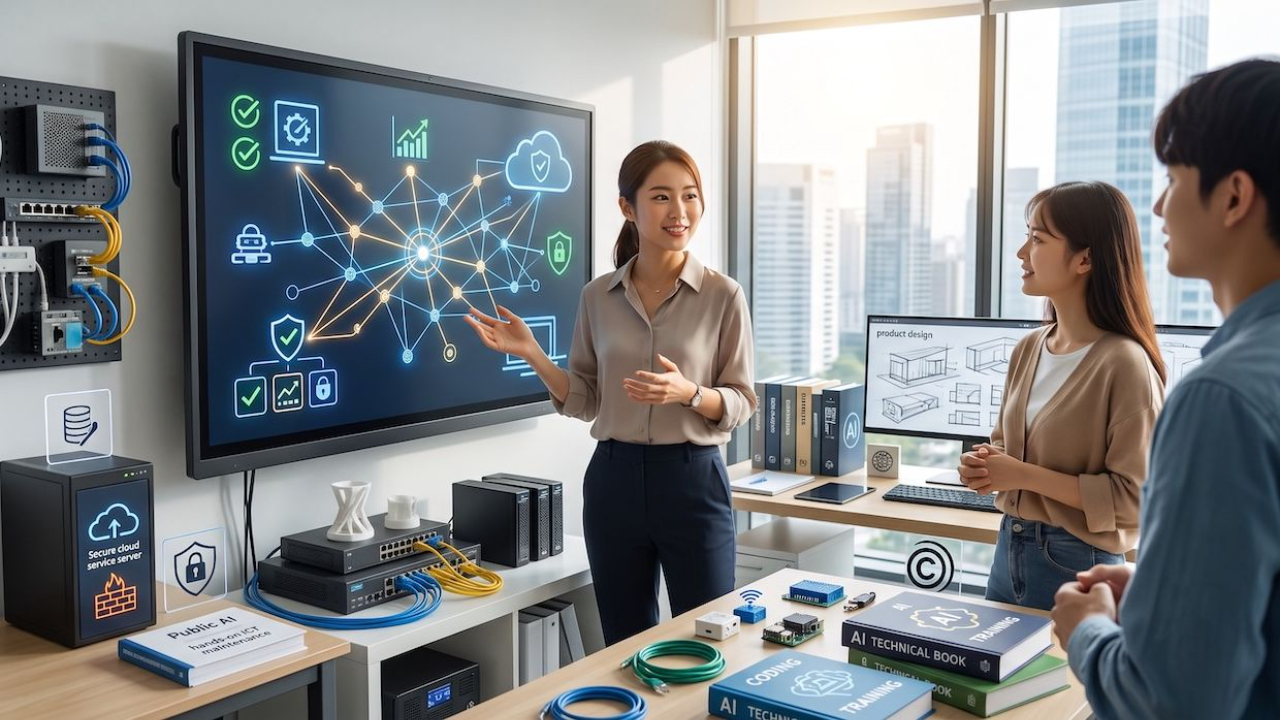
By Garbo Tian
In 2026, entrepreneurship is undergoing a fundamental transformation. The One-Person Company (OPC) model has emerged as a dominant trend, allowing individuals to run full-scale business operations—from product design and marketing to market entry—with the support of AI agents and low-code technologies. Unlike traditional self-employment, the OPC model operates as an independent legal entity with limited liability protection, making it the ideal structure for modern digital entrepreneurship.
💡 Quick Takeaways: The OPC Shift
- Why OPC? It empowers founders to build an entire business loop without the need for large teams or massive overhead, focusing on "Personal Leadership + AI Synergy".
- The Core Challenge: While AI lowers entry barriers, solo founders often struggle with high compute costs, data security risks, and technical skill gaps.
1. Four Mature Tracks for AI-Empowered OPCs
The OPC model has successfully matured into four specific domains, providing a clear path for independent founders:
| OPC Domain Track | AI Operational Strategy |
|---|---|
| Digital Content | Individual creators, designers, and short-video producers leverage AI to automate material creation, editing, and account operations. |
| ICT Technical Services | Tech professionals use AI to generate project blueprints, troubleshoot equipment, and independently manage network operations or IT consulting for enterprise clients. |
| E-commerce & Trade | Solo merchants utilize AI for intelligent product selection, automated store management, and smart after-sales service, achieving "unmanned" daily operations. |
| Professional Services | Accountants, lawyers, and consultants use AI to rapidly retrieve legal regulations and generate standardized documentation, drastically increasing service efficiency. |
2. Bridging the Operational Gap: Solving the "Solo" Struggle
Despite the promise of AI, many solo founders fall into the "want to use AI, but can't afford or manage it" trap. Telecom operators and infrastructure providers are now stepping in to solve these structural bottlenecks:
- Security & Compliance: To protect sensitive customer and order data, specialized security cloud services—featuring data encryption and automated risk alerts—are being made available at accessible price points to prevent data leaks and network attacks.
- Digital Capability Training: To close the "digital divide," free public AI training programs are being deployed across regional service centers, covering practical skills like AI video creation, smart accounting, and ICT maintenance.
- Regulatory Guidance: New platforms are providing AI content copyright registration and pre-compliance checks for marketing materials to ensure solo businesses operate within the law.
3. Action Checklist: Launching Your OPC in 2026
If you are considering the transition to a One-Person Company, prioritize these three pillars to build a sustainable business:
- Adopt a Legal OPC Structure: Don't confuse "self-employment" with an OPC. Registering as an independent legal entity provides critical limited liability protection and broader financing channels.
- Focus on "AI-First" Operations: Select a track where AI can replace 70–90% of your repetitive tasks, allowing you to focus your human energy on the "non-replaceable" aspects: strategic decision-making and genuine relationship building.
- Prioritize Data Security: Since you are the sole operator, you are also the sole security officer. Use enterprise-grade secure cloud services and follow data compliance guidelines from day one to avoid leaks and privacy abuse.
Closing Thought
The OPC is no longer a fringe movement; it is the blueprint for the digital economy of the future. As national infrastructure continues to improve—lowering the cost of compute power and providing widespread AI education—the "One-Person Company" will continue to evolve as the primary engine for individual innovation.
By leveraging the right security, compliance, and training resources, anyone with a unique skill set can now transform their professional expertise into a scalable business.
❓ Frequently Asked Questions
Q: What is the difference between an OPC and traditional self-employment?
A: Unlike traditional self-employment, a One-Person Company operates as an independent legal entity. This structure provides the founder with critical limited liability protection and opens up broader avenues for formal financing.
Q: How are infrastructure providers supporting OPCs?
A: Telecom operators and infrastructure providers are bridging the operational gap by offering accessible security cloud services, deploying free public AI training programs to close the digital divide, and providing regulatory guidance platforms for copyright and compliance checks.
🎓 Deepen Your Strategic Mastery
Ready to leverage digital infrastructure to build your own One-Person Company? In the SOLOMOAT Mini MBAs, we decode the precise AI toolchains, operational frameworks, and structural strategies needed to transition from an individual contributor to an empowered OPC founder.