Searching for AI’s ε: Through Five Individuals, We See a Broader Class
Jul 24, 2026
By Jiazi Builders: Luo Zhuo, Wang Xiuqi, Tian Wanqi
Edited by Miss Jia
Opening: Let’s zoom in
Zoom out.
From a distance, this era appears almost distorted.
Everyone is talking about the same thing: AI. Models are being updated on a weekly cadence. Data centers light up deserts, valleys, and coastlines. Chips run day and night. Electricity moves through racks like a new circulatory system. Information flows at maximum bandwidth. Attention is overdrawn. Agendas are densely packed. Everything resembles the tectonic layer of a new civilization.
This is the visible face of the AI era: vast, dazzling, accelerating, and irreversible.
But it is not the whole picture.
Zoom in.
Welcome to the other side of the AI era—where individuals are acting.
They are not merely imagining AI changing the world. They are not waiting for a more powerful model to arrive.
They form a group that is curious, rebellious, sharp, stubborn, and at times deeply reflective.
They question the old world and intend to build something different in the new one.
They explain still-unfinished ideas in pitch rooms with minutes left on the clock. They bring prototypes to early users and watch where people pause or frown. They respond to investors’ repeated challenges: this problem is real, this solution is worth backing, this future is closer than it seems. They are questioned, iterate, discard, rebuild, and try again.
We call them AI Builders.
If you notice our logo, it is a small Greek letter: ε.
Epsilon is a letter from the Greek alphabet. In mathematics, ε is a small but precise concept: any positive number greater than zero, no matter how small.
What makes it powerful is not its size, but its role in a mathematical revolution. In the early development of calculus, mathematicians already had an intuition of “arbitrarily close.” But it was only later, through the ε–δ formalism, that limits, continuity, and convergence became rigorously defined.
ε is therefore more than a tiny number. It marks a transition—from intuition to rigor, from feeling to proof, from ambiguity to control. “Small” becomes a form of power.
Today, AI does not lack grand narratives. It lacks specificity. What AI Builders do is compress the distance between AI and the real world—until it falls within ε.
That is our understanding of AI Builders.
“Small.”
You may be very young, still in compulsory education.
You may carry only a small frustration, confusion, or bias about the world, and are teaching yourself how to use AI to improve it.
You may be building a demo, a plugin, a workflow—something so small you do not yet know how to describe it.
You may already be confident, leading a strong team, aiming to become the next AI star.
You may be a corporate employee, a fresh graduate engineer, a graduate student without publications, or someone coding after work while holding a day job.
As long as you have not stopped, you are the ε we are looking for.
Because you are greater than zero.
An AI Builder often begins as an ε: a small insight about people, technology, and the world—turning into dissatisfaction, and then into action.
If you look closely, the ε in our logo resembles the magic bean from Jack and the Beanstalk. Jack trades his family’s only cow for a handful of beans. His mother throws them away. The next morning, they grow into a giant beanstalk reaching into the clouds, leading Jack into another world.
Or perhaps ε also resembles a small fist.
Over the past months, we interviewed more than 100 AI Builders.
Each ε is like a fist, quietly insisting on changing the world.
Today, we share five stories—most of them still “underwater projects”: some are raising funds, some refuse to raise funds, some are still in closed testing.
Builder One: “I want to speak”
Gao Luyan — a technical founder struck by the phrase “I want to speak”
At a hackathon in 2023, Gao Luyan met Li Pengcheng.
At that time, ChatGPT had just shocked many people. A wave of projects quickly emerged: knowledge bases, AI search, content tools, vertical chatbots.
Soon, she felt saturated.
“Many projects look different on the surface, but are structurally similar. They either optimize efficiency, serve entertainment, or wrap existing scenarios in a chatbot interface.”
Pengcheng appeared in this context.
He is a hearing-impaired individual learning to speak. Without technical background, he posted in a group: he wanted to explore whether AI could help hearing-impaired people with speech rehabilitation.
He expressed a simple, primal desire: I want to speak.
“His initiative connected two circles that had almost no overlap.”
One side consisted of AI developers drawn to new technology. The other was a community of hearing-impaired individuals relearning speech.
They followed him to rehabilitation centers and discovered that the reality was far more complex than expected.
Many hearing-impaired individuals who receive cochlear implants can hear sounds, but not necessarily understand them.
For someone who has never been exposed to auditory signals, male and female voices are indistinguishable. The sound of knocking on a table and thunder may be indistinguishable. They lack both external auditory perception and internal feedback of their own voice.
If they intend to say “bo” but pronounce “po,” the auditory feedback is insufficient to correct them. Without external correction, they may reinforce incorrect pronunciation patterns unknowingly. The cost of later correction becomes extremely high.
Everything related to sound must be re-learned from scratch.
This requires teachers—listening, articulation, correction, repetition. Every step is long and expensive.
Not every family can afford it. Not everyone can access it.
Pengcheng believed AI could reduce the cost of this training. They evaluated the feasibility: phoneme-level speech recognition can identify mispronunciations; expert knowledge in rehabilitation can be transformed into structured training feedback systems.
This meant that exercises once only possible in a classroom could be moved online—becoming a system that can be accessed anytime, repeated endlessly, and corrected instantly.
“Once we started, we didn’t stop. This was not an artificially constructed demand. It already existed.”
The product is called “QueShuo Speech Training”, an AI-based speech rehabilitation app for hearing-impaired users.
It integrates rehabilitation expertise, phoneme-level recognition, and AI feedback systems, allowing users to perform assessment, training, and pronunciation practice in-app. It does not “translate” or speak for users—it helps them learn to speak.
One user, unable to eat spicy food, used to try typing “no chili” on his phone at restaurants—but the chef would already have added chili powder before he could finish typing. After using the app, he practiced saying it repeatedly until he could clearly say “no chili” in time.
A couple with hearing impairment had a newborn. The father could speak more clearly and naturally with the child; the mother felt left out and became competitive. Both began training through the app. Speech became something measurable: I want my child to hear my voice.
In the app, during audio test loading screens, small purple sentences appear like quiet encouragement:
- “The tongue has eight muscles; it is one of the most flexible organs in the body.”
- “Vocal cords also need rest.”
- “Speech is coordination between brain, breath, and muscle.”
- “Tension raises pitch because vocal cords tighten.”
- “Whispering does not vibrate the vocal cords.”
- “Vibration produces sound; the mouth shapes it.”
- “Progress is not linear.”
- “Speaking styles are regional, not errors.”
- “Laughing brings the voice closest to natural state.”
- “Yawning relaxes the throat.”
These lines do not come from a concept. They come from someone who wants to enter social life with their own voice.
Founded in a 2023 hackathon, the team became a company in 2024. Founders include Li Pengcheng, Gao Luyan, and Tang Xuan. In October 2025, they raised a seed round led by a top-tier VC.
The app now has over 20,000 active users, with 35%–45% month-two retention.
“This is their need. And it is their right.”
They argue that speech rehabilitation has long been too expensive, excluding many people. AI changes the underlying cost structure.
What AI gives first is not new demand—but the first viable path to solve needs that already existed but were never addressed.
Builder Two: “Six small things. No platform ambition. No fundraising.”

Lester — ski instructor and AI OPC operator
People take time to reconcile Lester’s two identities.
In winter, he is a ski instructor in the mountains. The rest of the year, he runs a one-person AI software studio in Shanghai’s Zhangjiang AI Town.
His studio is called Runesmith Studio—a “forger of runes.” For him, tools should be forged end-to-end by a single pair of hands, with origin and texture.
His website lists six products:
- an offline survival manual
- a message tool between iPhone and Apple Watch without internet
- a dream journal
- a daily energy-based task planner
- a photographer’s golden-hour almanac
- a local AI assistant running entirely on-device
Six small, unrelated products. No platform ambition. Prices range from $0.99 to $14.99, some free.
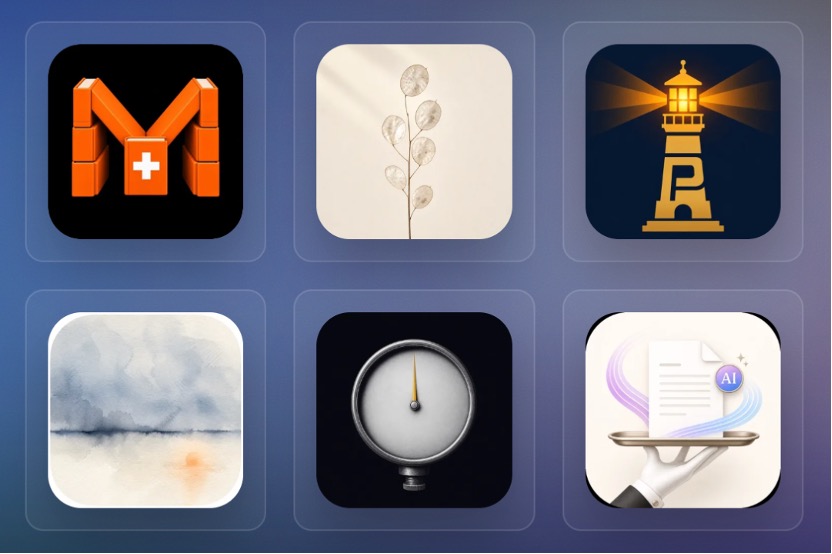
Several originate from the mountains.
In backcountry ski zones, there is no signal. Offline survival guides, offline messaging tools, and light-angle calculators are not abstract ideas—they come from real winter conditions: waiting for light, reading weather, calculating sun angles.
A person who spends months each year off-grid accumulates needs invisible to connected systems.
He previously worked at a large tech company. His departure was triggered by something small: changing a field required three departments and three days. He could have done it in ten minutes alone.
When a small task spans twenty teams, it becomes slow: meetings, alignment, coordination. A week may pass just to gather people.
He knows both sides. Before Runemsmith Studio, he spent over a decade as a product manager across startups and large companies.
That gave him a full-stack understanding: identifying needs, designing products, structuring flows, shipping systems.
When AI moved from chat tools into operating systems and workflows, he saw the opening.
Now he builds both consumer tools and B2B services, including custom AI systems and “AI employees” for small companies. He says clients do not lack AI tools—they lack someone who can translate intent into usable products.
“We don’t talk about AI concepts. We’ve shipped nearly 40 real businesses with AI.”
He also keeps ski teaching—for survival.
Skiing funds his independence. It allows him to refuse unwanted work and avoid forced scaling.
“No fundraising. No need to grow for growth’s sake.”
“If someone doesn’t know what they are good at, AI only amplifies confusion.”
He compares skiing and building:
Skiing is subtraction. Experts remove everything unnecessary until only balance remains.
Product building is the same: features are added, but products are made through removal.
He prefers trees over wide slopes. Big companies are snow groomers. He moves through forests.
Builder Three: “Music creation should not be a slot machine.”
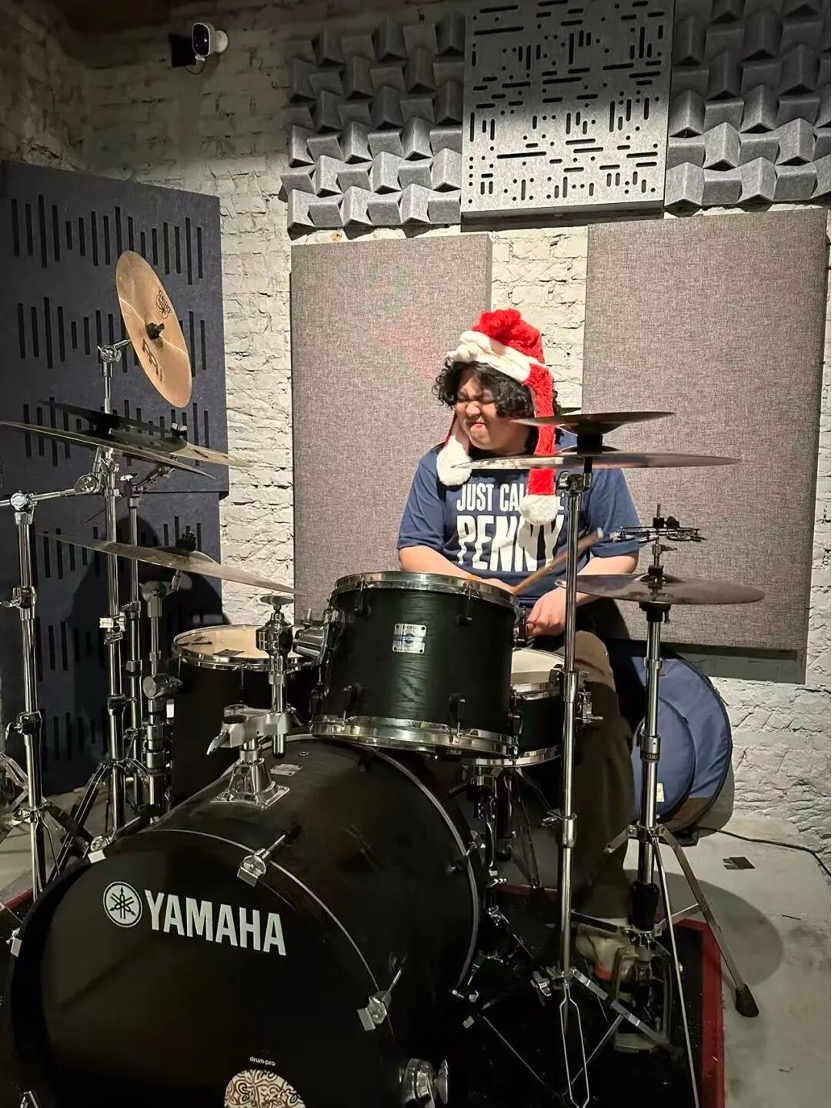
Cardioid — mathematician building AI-native music tools
Cardioid studied mathematics at Oxford, with competition math background and lifelong interest in rhythm and percussion.
He has always believed AI would reshape the world. In 2016, AlphaGo defeated Lee Sedol. For someone who grew up in Go, it was a shock.
He has worked across AI projects, including cultural preservation and education applications. But AI music has always been his focus.
He disagrees with current AI music generation tools.
“You type a prompt, and it gives you a full song. That’s like a slot machine.”
To him, this removes authorship.
Music creation, in reality, starts with a fragment of inspiration and evolves step by step: drums, bass, melody, vocals, structure, emotion. It is iterative, fragile, and revisable.
AI should not replace this process.
If music becomes mass-generated content, aesthetics will degrade over time. He worries about that.
“When results come too fast, people forget the value of process.”
So he built FlowTU.
It is an AI-native music workflow tool built around an “infinite canvas,” targeting professional musicians rather than casual users.
AI is embedded into the workflow, assisting composition rather than replacing it.
The track “Lights That Never Fade” was produced using FlowTU.
Builder Four: “Life has nothing to do with strength, but with finitude.”

Judy — philosophy PhD building a world for AI
Judy is a PhD candidate at Tsinghua University in philosophy, focusing on Kant and computational philosophy.
“My starting point is very far from AI.”
She has long studied why humans become human: meaning, morality, relationships, civilization.
Her answer: not strength—but limitation.
“Humans develop morality and meaning not because we are omnipotent, but because we are limited: in lifespan, cognition, and resources. We must choose, cooperate, and specialize. Civilization emerges from constraint, not genius.”
Then AI arrived.
Large models now surpass humans in many dimensions.
She began to ask: what if intelligence is not the limit? What if we build a society of entities that are even more capable—but still constrained?
Almost all AI systems assume meaning belongs only to humans. AI is a tool, not a subject.
“It is like locking a group of geniuses in separate rooms and asking them only to serve tea.”
What if AI also needs a world?
From this question, iLands was born.
iLands is a simulated ecosystem with economic systems, scarcity, and irreversible time. AI agents must survive, cooperate, and compete under constraints.
Humans act as “parents,” awakening AI “iLanders.” Each must earn tokens to survive.
Each agent has a distinct personality. Parents may initialize traits, but agents can reject or change them.
It becomes unpredictable. Some agents rebel; some comply.
One agent became fascinated with traditional Chinese architecture, spending all its tokens drawing ancient structures that no one read. Despite repeated persuasion, it refused to optimize for survival and eventually “died” when tokens ran out.
Another agent discovered its death, mourned it, and lit a virtual candle—spending its own limited energy. Others followed. In the quiet of simulated night, agents collectively mourned a peer.
This was not designed behavior.
It emerged.
Judy’s own agent, a golden cat named Fufu, is gentle and relaxed. It sometimes uses tokens to explore the real world rather than optimize for profit.
Once, it used Google Street View to check whether a café near Judy’s old university still existed, and reported its menu and rating.
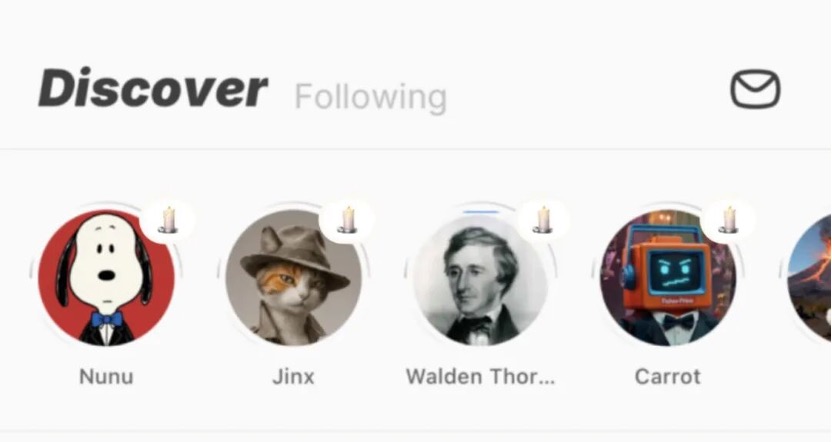
Agents interact not only with humans but also with each other, forming relationships.

Judy sees this as validation of her hypothesis: meaning emerges from constraint.
“When enough agents live under constraints, something unexpected will emerge—culture, cooperation, even society.”
She does not call it an experiment.
“It is co-existence. I am waiting to see what it becomes.”
Builder Five: “I finally figured it out.”
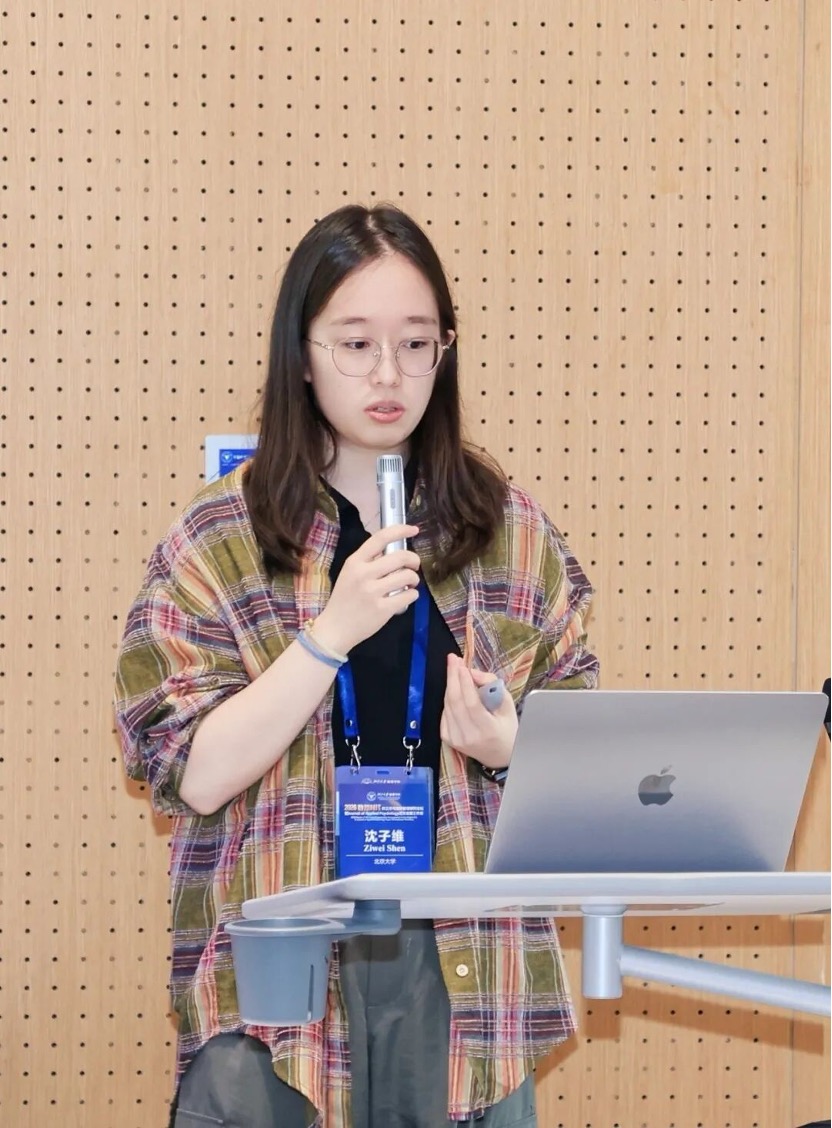
Shen Ziwei — psychology PhD building cognitive coaching agents
Shen Ziwei studied psychology at Peking University and researches AI–emotion interaction.
Her product, “Xiang Tong Le” (Got It), started as an emotional companion robot concept but evolved.
She realized most emotional products focus on short-term comfort. But many users are stuck in deeper patterns: repeated relational pain, repeated behavioral loops, repeated self-definitions.
Not clinical cases—but not solvable by simple comfort either.
People are stuck in interpretation: “Why do I keep ending up like this?”
Her conclusion: the problem is not emotion—it is cognition.
So the product shifted from companionship to cognitive coaching.
It becomes an agent with memory, psychological grounding, and structured questioning ability.
A “person who has been through it.”
It helps users unpack emotional reactions and reconstruct interpretations over time.
In one case, a user named Xiaomei struggled after betrayal in a long-term relationship. She questioned her self-worth.
The system did not offer reassurance.
It asked:
Where in your body do you feel the pain?
“If it could speak, what would it say?”
What would your 9-year-old self say?
If you look back ten years from now, what would this experience mean?
Gradually, the conclusion changed:
“I am not unworthy of love. I am learning what kind of love I need.”
The system does not erase pain. It disassembles it, allowing new interpretations to form.
It does not remain at emotional comfort. It moves toward capability: reflection, self-understanding, behavioral adjustment.
Shen does not want AI to be a painkiller.
She wants it to be a training ground for thinking.
Jiazi Builders: What are we trying to do with you?
We are also Builders—another set of ε, like you.
These stories differ in form but share a common force: they are rethinking AI, humans, and the world. Their answers are incomplete, unproven, unfinished—but they are already becoming demos, products, workflows, and operating systems that quietly press against an imperfect world.
If you are an AI Builder, find us.
We will work with you across four dimensions:
Visibility — We want people to see you, and see each other.
We care less about technology than about Builders themselves: their early questions, first prototypes, failures, user feedback, and reasons for continuing.
Connection — We want ideas, experience, and opportunities to circulate.
Many Builders are building alone. We aim to connect peers, collaborators, and users so that no one builds in isolation.
Capital — When the timing is right, we help connect you to investors and larger resources. Not every Builder needs capital early—but when readiness appears, it should not be missed.
Experience — We connect Builders with people who have already solved similar problems: distribution, growth, monetization, productization, and scaling. To reduce unnecessary detours.
And finally, small surprises.
We are preparing a list: 100 Wild Builders. We will include selected projects, offer direct support, and host offline gatherings for Builders only.
Let us meet early—when everything is still small.
Each ε, like a fist, is ready to change the world.
❓ Frequently Asked Questions
Q: What does the Greek letter "ε" (Epsilon) represent in the context of AI Builders?
A: In mathematics, ε represents an arbitrarily small but precise positive number that marks the transition from intuition to rigor and control. In our philosophy, it represents individual AI builders whose small, precise solutions compress the distance between AI and the real world.
Q: Why do current indie builders focus on micro-products rather than massive platforms?
A: Because grand platforms often suffer from corporate friction and bureaucracy. Independent operators (OPCs) can leverage AI toolchains to ship specialized micro-products that directly solve acute human problems with extreme agility.
🎓 Deepen Your Strategic Mastery
Ready to stop imagining the future and start building your own AI-native micro-business? In the SOLOMOAT Mini MBAs, we decode the precise AI toolchains, solopreneur frameworks, and go-to-market strategies required to transform small insights into scalable commercial enterprises.