
Silver at the Twilight of Empire: How Gresham’s Law Foreshadows the Deadlock of Modern Quantitative Easing?
Jun 25, 2026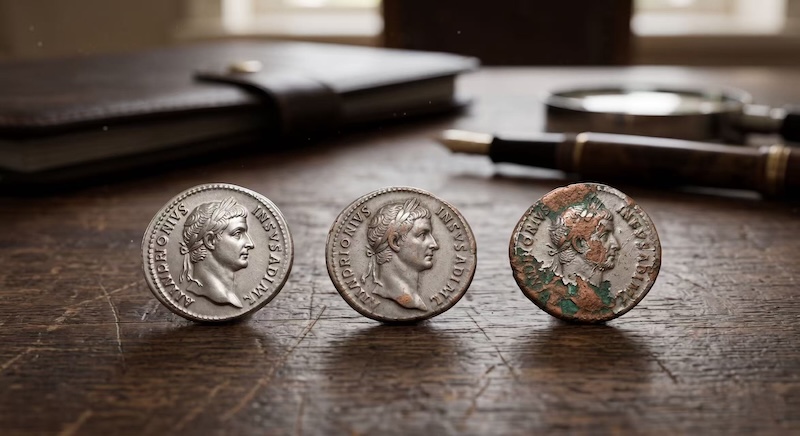
- Why is currency debasement the fatal precursor to imperial collapse? From the Roman Empire to the modern welfare state, the expansion of power is inevitably accompanied by runaway spending. When tax revenues fail to fill fiscal black holes, rulers resort to secretly reducing the precious metal content of coinage (or engaging in quantitative easing), thereby conducting an invisible plunder of society without raising tax rates.
- What is the actual mechanism of "Gresham’s Law" (bad money drives out good) in modern finance? When a government mandates that currencies with differing intrinsic values share the same face value, rational market participants will hoard "good money" with high intrinsic value (such as hard assets or gold) while rapidly offloading depreciating "bad money" (fiat paper) into circulation. Consequently, the market becomes saturated with toxic assets.
- How can one identify "Romanization" features within macroeconomic cycles? Observe the precipitous erosion of monetary purchasing power. When the purchasing power of a legionnaire’s pay—the modern equivalent of middle-class wages—can no longer keep pace with inflation, leading to the collapse of the social contract, the system has reached its critical tipping point.
If you believe the great Roman Empire fell to the iron hooves of Germanic tribes and the scimitars of barbarians, your history lessons require a retake. The lethal toxin that dismantled that invincible transcontinental empire was hidden quietly in the denarius—the silver coin in every Roman citizen’s pocket. From a hard currency of 100% silver at the dawn of the era to a pathetic piece of scrap copper coated in a thin silver film—with a silver content of a mere 0.5%—by 265 AD, Roman emperors staged history's earliest and most shameless "Quantitative Easing" (QE). When the greed of power exceeded the limits of the treasury, rulers discovered that conjuring wealth through clandestine debasement was far easier than taxing an angry populace. History rhymes; today’s central bankers, clicking out trillions in QE on their keyboards, are merely Roman coin-smiths in bespoke suits.
For asset allocators navigating global markets and vigilant elite generalists, the debasement of the Roman denarius is no mere ancient anecdote. It is a precision strike against the revelry of modern printing presses.
The foundational commercial contract between government and citizen is built upon the honesty of money. Yet, to fund vast bureaucracies, endless foreign wars, and "bread and circuses" to appease the electorate, modern governments are treading the same fiscal precipice as the Romans. Gresham’s Law has not aged; it rules Wall Street more covertly than ever. As the Federal Reserve’s printing presses roar day and night, rational investors shun "bad money" (paper cash and low-yield bonds) in favor of "good money"—prime real estate, scarce Bitcoin, and gleaming physical gold. By understanding the trajectory of bad money, one understands why the prices of core hard assets are galloping like runaway horses despite a stagnant global economy.
Strategic Alpha
|
The Symptoms of Imperial Decline |
The Playbook for the Era of Bad Money |
The Alpha: Anti-Debasement Dividends |
|
Fiscal Black Holes and Invisible Taxation: Welfare societies and bloated military spending lead to runaway outlays; governments conduct bottomless "seigniorage" plunder through currency over-issuance. |
Guard Against the Collapse of Purchasing Power: Cease focusing on nominal wage and yield growth; anchor all asset returns to real, "inflation-adjusted" purchasing power. |
Strip away the monetary illusion to avoid sliding down the social ladder while nominal wealth grows. |
|
Systemic Outbreak of Gresham’s Law: Markets are flooded with over-issued fiat, while hard assets with genuine wealth-preservation properties are withdrawn from circulation into private vaults. |
Execute "Hoard Good Money, Shed Bad Money": Convert daily income (bad money) as quickly as possible into scarce core assets (good money); never hold excessive zero- or low-interest cash. |
In the mire of excess liquidity, seize the pricing high ground of scarce resources to achieve a leap in wealth magnitude. |
|
Bottom-up Collapse of the Social Contract: When inflation destroys the purchasing power of ordinary workers, it inevitably triggers strikes, the rise of populism, and violent shocks to the political structure. |
Allocate Trans-sovereign Defensive Assets: Increase holdings of global hard currencies within balance sheets that are beyond the jurisdiction and taxing power of any single government. |
Immunize against geopolitical instability and the irrational impact of domestic populist tax policies. |
To remain lucid in a world of "legalized counterfeit," one requires a macro-detector to pierce the monetary illusion. The Niche Hunter tracks subtle shifts in global central bank "mints" like a hawk, capturing arbitrage signals on the eve of currency debasement. By joining the insider club of the SOLOMOAT, you will learn—through the rigorous simulations of Mini MBAs—how to reverse-engineer Gresham’s Law: let others catch the silver-washed scrap iron while you lock the true silver in your vault.
(To begin your asset scarcity audit, please connect with the SOLOMOAT Core Strategic Think Tank.)