Temporal Alchemy: Why a Bottle of Sorghum Water is a $300bn "Social Currency"
Jun 18, 2026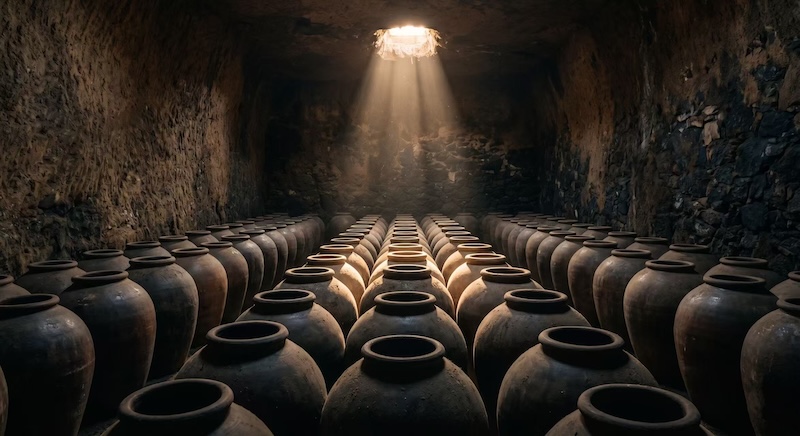
- Why does an extremely inefficient five-year production cycle yield a stratospheric gross margin of 92%? In an era where everything can be accelerated by AI, "incompressible physical time" has emerged as the rarest of commercial barriers. By monopolising the cost of time, Moutai transforms an agricultural product into a financial asset with the attributes of a Veblen Good.
- How has this spirit performed the leap from "consumer good" to "social contract"? Moutai has transcended the physical properties of alcohol, evolving into "liquid credit" within the context of Eastern commerce. Opening a bottle at a negotiation table is, in essence, a demonstration of respect for long-term value and rules—a pledge of social consensus.
- How should global investors revaluate the "slow" strategic premium? One must abandon the singular cult of high inventory turnover associated with fast-moving consumer goods. As capital frantically pursues digitisation and instant gratification, contrarian investment in "slow assets"—those that use physical time to precipitate inimitability—offers monopoly-level pricing power that traverses economic cycles.
If a business plan were pitched to you with the following terms: the raw materials consist merely of the cheapest sorghum and water; capital will be locked away in heavy earthenware jars for five years without any cash flow return; and during this period, one must continuously incur storage, management, and high interest costs. In any actuarial model on Wall Street, this would sound like a slow-motion financial suicide. Yet, on the other side of the globe, it is precisely this "arrogant" rebellion against modern commercial efficiency that has forged a capital titan with a market value that once surpassed $300 billion and sustains a terrifying gross margin of over 92%. This is not merely a sharp riposte to the "efficiency-first" doctrine of classical economics; it is the ultimate alchemy of converting physical time into balance-sheet gold.
Time Hegemony and the Discounting of Social Credit
For global professionals and private investors glued to their screens, attempting to extract a few basis points from high-frequency trading on the Nasdaq, the valuation code of Moutai reveals a deeply unsettling truth: while you strive to compress a microsecond of transaction latency via algorithms, the apex predators are busy monopolising "slowness".
For the past half-century, the leitmotif of global commerce has been the breaking of boundaries and instant gratification. Moutai, however, stands as a cold contrarian. It informs you that the bottle you purchase today is the crystallisation of sunlight, rain, and microbial colonies from five years ago. In an age where a startup’s pitch deck can be auto-generated by AI in three seconds, the "authenticity" precipitated by the passage of physical time is, perversely, the most expensive luxury. More lethally, it has achieved an elevation from alcohol to a "collateral of social consensus". Within Eastern power and business networks, this bottle is liquid credit—a social contract upon the dining table. To view it merely as a consumer good is as foolish as mistaking the Federal Reserve’s printing press for a common commercial print shop.
Strategic Alpha
|
Cognitive Trap |
The Time-Arbitrage Playbook |
The Endgame Alpha |
|
Efficiency Superstition: An excessive pursuit of capital turnover that reduces products to undifferentiated, barrier-less commodities. |
Monopolising Incompressible Time: Using long physical/biological cycles as a core ingredient and rejecting any "technical compromises" intended to shorten delivery. |
In an era where AI and industrialisation have levelled all manufacturing barriers, one enjoys the absolute premium of "authenticity". |
|
Functional Limitation: Binding a consumer good strictly to its physical use-value (e.g., quenching thirst or intoxication). |
Elevating to "Social Contract": Reimagining the product as a high-barrier social signal, rendering it a hard currency for interpersonal gaming and trust endorsement. |
Transcending the curse of demand elasticity to become a "Veblen Asset" where demand rises with price. |
|
Short-term Capital Hijacking: Succumbing to Wall Street’s greed for quarterly reports and sacrificing quality for short-term book prosperity. |
Filtering Fickle Capital: Using a half-decade "sunk period" to naturally insulate the moat from passive capital and speculators. |
Securing systemic stability through bull and bear cycles, allowing time to become an exclusive competitive barrier. |
To perceive this "Eastern Alchemy," which seamlessly stitches social culture with financial logic, traditional Harvard Business School case studies are too pale. Garbo Decodes China long ago offered a sharp dissection of the deep code that binds power, credit, and consumer goods. For the elite seeking authentic arbitrage space amidst global mists, the Mini-MBAs of the SOLOMOAT provide the indispensable intellectual antidote—teaching you to peer past the skin of commerce to the very bone and nerve of a multi-billion dollar valuation.
While you are still ordering employees into overnight overtime to improve operational efficiency by 10%, consider this: sometimes, letting capital sleep in the damp soil for five years is the smartest formula for windfall profits.