
The “Trojan Horse” of Times Square: Using Premium Rents to Purge a Low-End Legacy
Jun 16, 2026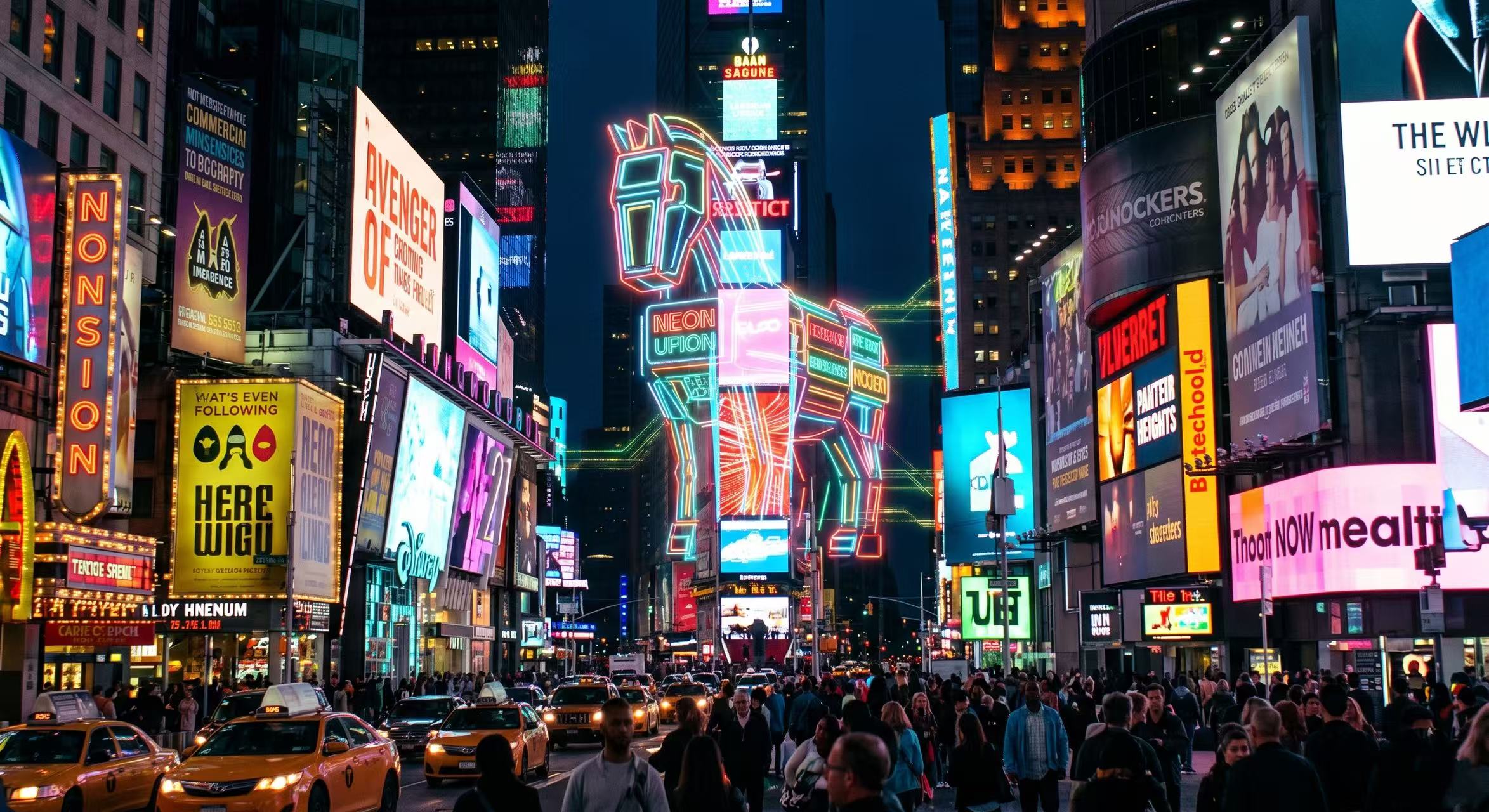
- Why do 70% of multinationals encounter their Waterloo within the first three years of overseas expansion? They haughtily equate "exporting" with "globalisation," blithely assuming that shipping domestic best-sellers in containers with English labels will suffice to conquer foreign markets. In doing so, they entirely ignore the disconnect between commercial context and local culture.
- What is the essence of Miniso’s “Glocalization” strategy? It is far more than mere linguistic translation; it is the "highest level of emotional bribery". Whether it is introducing Mickey Mouse clad in a Merlion skin in Singapore or Muay Thai-themed plush toys in Thailand, the firm uses its supply chain efficiency to pay tribute to local consumers in exchange for cultural recognition.
- Why would a budget retailer pay exorbitant rents in New York’s Times Square? Rents in premier commercial districts are not merely real estate transactions; they are "PR and marketing expenses" for brand positioning. By establishing a presence in Times Square or on the Champs-Élysées, Miniso effectively hijacks the commanding heights of global retail momentum, instantaneously purging its low-end, "down-market" brand DNA.
Imagine the standard haughtiness of a multinational CEO: standing before a floor-to-ceiling window, pointing at Bangkok or New York on a world map, and commanding, "Sell our products there". This is the classic opening scene of a global commercial disaster. In reality, firms that attempt to force-feed domestic clichés to overseas consumers typically retreat in ignominy, leaving behind nothing but a mess. Yet, a Chinese enterprise once dismissed as a "ten-yuan shop" from the lower-tier markets has defied logic, drawing long queues of Western consumers at prime locations like New York’s Times Square and Madrid’s Gran Vía. It did not attempt to court the world with cheapness; instead, it played a cunning "Chameleon" game of "Glocalization" across the planet.
Emotional Bribery and the Hijacking of Momentum
For decision-makers and multinational investors seeking to expand their global footprint, this history of overseas expansion reveals an expensive truth: the essence of transnational business is not about crushing others with your commodities, but about using your supply chain to "pay tribute" to local culture.
When the familiar Mickey Mouse dons a Singaporean Merlion outfit or transforms into a gloved Thai boxer, it is no mere production-line variation. In the realm of consumer psychology, this represents the ultimate respect and "emotional bribery" offered to the host culture. Even more impressive is the firm’s top-down "momentum blitzkrieg". Conventional wisdom for a frugal retailer suggests a slow maturation within the safety of low-cost suburban outlets. Miniso, however, defied financial common sense by sinking astronomical sums into a flagship store in Times Square. This seemingly loss-making rent was, in fact, the purchase of an entry permit into the club of "world-class brands". By surviving at the world’s most expensive crossroads, the firm used brute physical force to thoroughly wash away the sense of cheapness from its corporate DNA.
Strategic Alpha
|
The Trap of Globalisation Arrogance |
Chameleon Market Entry Tactics |
Geopolitical Arbitrage |
|
Equating "exporting" with "globalisation" |
Glocalization: Abandoning rigid exports in favour of deep cultural customisation (such as local IP integration) to eliminate psychological rejection by foreign consumers. |
Overcoming geopolitical and cultural barriers to achieve a genuine "soft landing". |
|
"Incremental growth" from the periphery |
"Decapitation Strike" on momentum: Counter-intuitively seizing the highest-priced real estate in global retail (e.g., Times Square), treating exorbitant rent as highly efficient global PR. |
Instantly establishing the potent, if illusory, prestige of an "international brand," delivering a "dimensionality reduction" strike against all imitators. |
|
Clinging to domestic pricing and positioning |
Flexible Posture and High-End Output: Using the environmental premium of top-tier districts to offset low product prices, allowing consumers of all classes to engage in impulse buying without a sense of shame. |
Thoroughly shedding the "down-market" stigma of the original brand to achieve a global revaluation of brand premium. |
To master this dangerous game played between cultural fissures and capital momentum, one cannot rely on dry theories of transnational communication. Garbo Decodes China has long pierced through the aggressive "overseas camouflage" employed by Eastern enterprises. Within the elite circle of the SOLOMOAT, we will lead you beyond geographical boundaries, teaching you how to use the momentum of premier commercial districts and the "jiu-jitsu" of localisation to checkmate opponents on the chessboard of global expansion.
Explore the deep waters of transnational momentum hijacking; contact the SOLOMOAT Chief Strategy Terminal.