Why Do We Need an AI Content Framework Today?
Jul 31, 2026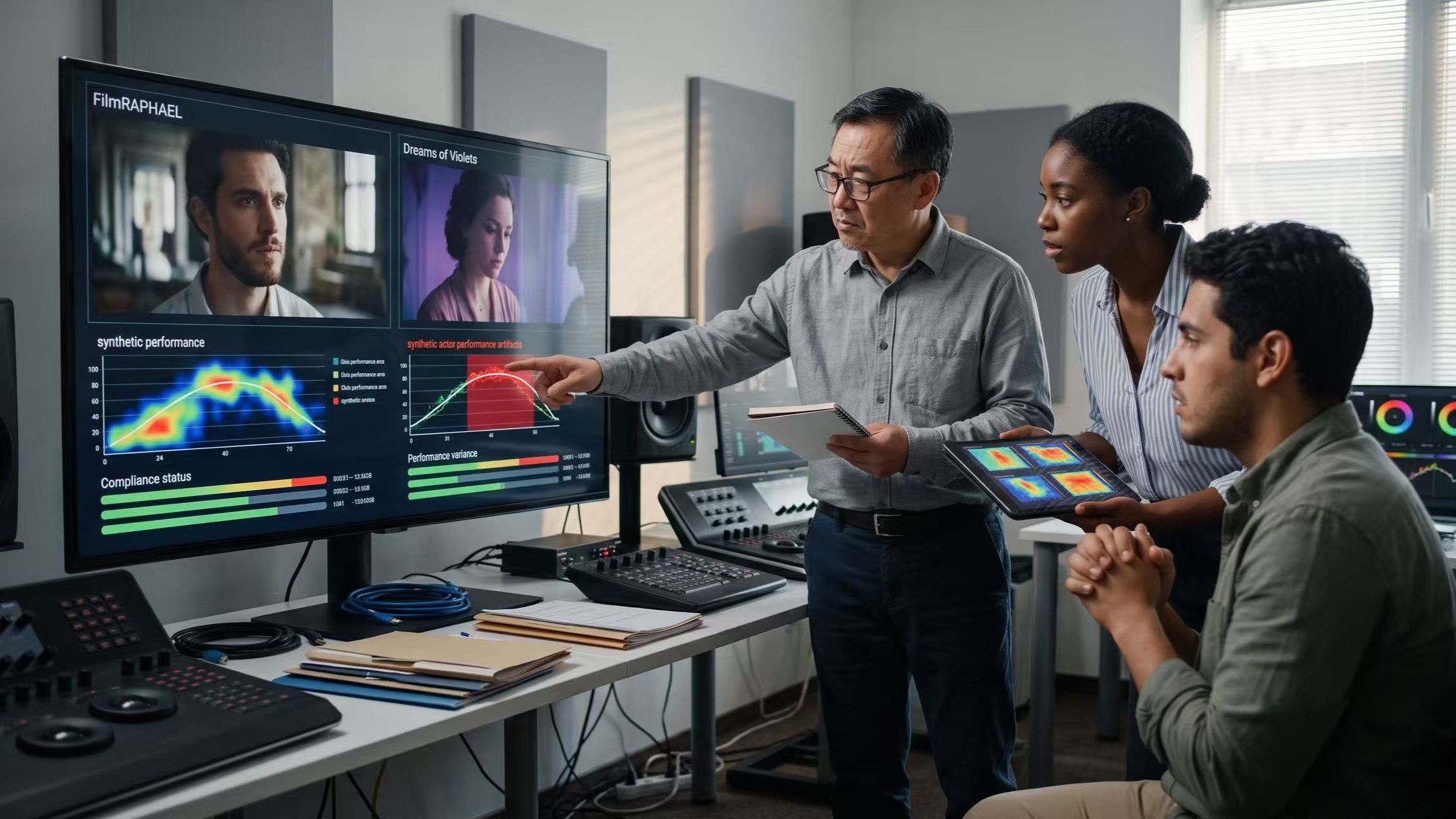
By Chen Meng, Senior Research Fellow, Digital Content Research Center, Tencent Research Institute; Wang Minxing, PhD Candidate, School of Journalism and Communication, Peking University
The recent controversy surrounding Amazon’s AI-animated project Punky Duck—which was ultimately halted after a wave of ethical backlash and online boycott—offers a revealing snapshot of AI-generated content’s current predicament. Once promoted by Amazon MGM Studios as a “creative breakthrough,” the project’s collapse reflects the broader tensions now defining AI in cultural production.
For the film and television industry, 2026 has become a structural inflection point. AI is no longer limited to generating striking video clips; it is now capable of producing complete visual narratives. It is shifting from improving isolated production steps to enabling entirely new pipelines for short-form drama. It is moving from occasional substitution of human performance to the rapid expansion of synthetic, human-like content.
This acceleration has triggered an unusual form of industry self-contradiction.
On one side, AI’s penetration into filmmaking appears irreversible. AI-assisted feature films are moving toward theatrical release at increasing speed. At the 79th Cannes Film Festival, the Korean AI film RAPHAEL was screened at the Cannes Marché du Film. Planned for theatrical release in 2026, it was produced by a team of just seven people using Kling AI. Another 75-minute AI-generated film, Dreams of Violets, completed in three months on a budget of only $2,000, has become the first fully AI-generated feature to be selected by a major film festival. In China, Sanxingdui: Future Past, the first AI-native theatrical film, has obtained an official distribution license from the National Film Administration, signaling the formal regulatory inclusion of AI-generated cinema.
On the other side, criticism of AI in film and television has intensified rather than receded. The replacement of human performers remains the most contentious frontier. In May, the Screen Actors Guild–American Federation of Television and Radio Artists (SAG-AFTRA) reached a four-year interim agreement with major Hollywood studios, restricting the use of AI-generated “synthetic actors” unless they demonstrably deliver “significant additional value.” In China, the discussion around “AI talent databases” has triggered widespread concern over consent, regulatory compliance for digital likeness, and the future structure of the industry.
AI, in effect, is now “dancing with shackles” inside the film industry.
Amid these conflicting signals, the central question has become clearer: when technological change is already reshaping production in irreversible ways, the debate is no longer about whether AI should be used, but how it should be used. The real task is to define its boundaries in cultural production. This, arguably, is the starting point of any serious engagement with AI disruption.
💡 Core Strategic Takeaway: The Necessity of Content Boundaries
- The Structural Inflection Point: As AI transitions from generating clips to producing complete visual narratives, cultural production faces an unprecedented clash between industrial efficiency and human creative preservation.
- The Governance Framework: Defining clear boundaries—protecting human creative space, preserving final authorship, and ensuring transparency—is no longer optional; it is the prerequisite for a sustainable creative economy.
Why Does AI Entering Film Feel Unusually Unsettling?
Unlike many other sectors, AI’s arrival in cultural production did not sustain an early wave of efficiency optimism. It quickly gave way to skepticism, anxiety, and fragmentation of opinion.
The contradiction is striking. Audiences simultaneously consume AI-generated pet videos and surreal “AI fruit soap operas” on short-video platforms, while expressing resistance toward AI films and synthetic performers on social media. In 2025, China’s AI-generated animation and comic market reached RMB 18.98 billion, reflecting strong demand for fantasy and highly imaginative content. Abroad, “AI fruit soap operas,” often built on exaggerated and absurd narratives, spread rapidly across platforms, with some accounts gaining over 3.1 million followers within nine days. Similar content has accumulated billions of views after entering Chinese platforms.
These patterns confirm that AI-generated video already has a substantial consumption base.
Yet when AI enters traditional film production, reactions shift sharply. Some creators are even accused of “betraying art for profit.”
The explanation lies in a deeper mismatch: different media contexts activate different cognitive structures and psychological expectations. In cognitive psychology, Daniel Kahneman’s dual-system theory offers a useful lens. System 1 is fast, automatic, and intuitive; System 2 is slower, deliberate, and analytical.
Cultural consumption maps onto this division. Some content is designed for immediate gratification and low cognitive load. Other forms require sustained attention and meaning-making. Modern media ecosystems have effectively split along these lines: film and long-form storytelling tend to function as carriers of reflection and emotional depth, while short video, micro-dramas, and mobile games are optimized for fragmented attention and instant reward.
These can be loosely described as “cultural meals” and “cultural fast food.” The distinction is imperfect—long-form content can be shallow, and short-form content can be meaningful—but it captures a structural tendency: screen size, viewing distance, and duration all shape cognitive engagement.
AI aligns more naturally with the production logic of “cultural fast food.”
Why AI Fits “Fast-Content” Production
AI’s current capabilities are structurally aligned with fragmented, high-frequency content environments.
Short video and micro-drama formats are modular by design: fast pacing, short narrative units, and highly standardized character and setting templates. This makes them ideal for AI systems, which excel at recombining learned patterns rather than constructing complex narrative originality.
In these environments, viewers rarely scrutinize subtle performance details or continuity. Minor visual artifacts or synthetic imperfections are often irrelevant. In some cases, the “non-real” quality of AI-generated visuals even produces an unintended aesthetic effect—an uncanny, stylized form of absurdity that fits the genre.
AI also aligns with emotional consumption at the surface level. Short-form content is often not about immersion but about rapid affective feedback. AI strengthens this logic by generating more exaggerated scenarios, sharper visual shocks, and more compressed narrative payoffs.
Finally, AI fits the economic logic of free platforms. Most short-video and micro-drama ecosystems rely on advertising and engagement-based monetization. The priority is not narrative integrity but production volume and continuous feed replenishment. AI’s ability to generate content at scale directly supports this model.
AI in Film: A Deeper Challenge to Human Participation
AI’s compatibility with fast-content ecosystems does not translate into full substitution in film and high-end cultural production.
The film industry carries higher expectations of artistic quality and emotional credibility. More importantly, it is structurally built around human participation.
On the supply side, AI is reshaping a mature and deeply institutionalized production chain. It may compress multiple roles and functions across the industry, generating more disruption than job creation in the short term. At the same time, it accelerates the absorption of historical creative output, recombining the work of directors, writers, and actors into on-demand stylistic outputs.
On the demand side, AI is increasingly attempting to move beyond surface-level stimulation toward emotional simulation—producing “realistic” performances and coherent emotional arcs designed to evoke trust and immersion.
This is where tension emerges: AI is no longer just a tool for efficiency. It is moving toward the core of cultural production—emotion, identity, and meaning-making.
| Content Ecosystem | Cognitive & Economic Logic | AI Integration Status |
|---|---|---|
| “Cultural Fast Food” (Short video / Micro-dramas) | System 1 processing; fragmented attention; instant reward; ad-supported scale. | High compatibility. AI excels at modular recombination, high-volume scaling, and surface-level stimulation. |
| “Cultural Meals” (Film / High-end storytelling) | System 2 processing; sustained attention; reflection, emotional depth, and meaning-making. | Deep friction. AI challenges the core of human emotional credibility, authorship, and institutionalized labor chains. |
The Unique Value of Human Creators in Content Industries
Will AI replace human creative value?
In cultural production, content is inseparable from human experience. Its value is not purely technical; it is relational.
AI will inevitably redefine content value. Some forms of human production will be devalued, while others become more scarce. When value depends heavily on standardized and replicable inputs, substitution becomes more likely.
A clear example is visual effects. As AI dramatically lowers the technical barrier to high-quality imagery, visually driven films face increasing pressure. Historically, film value has been tightly linked to technological novelty. AI now compresses that scarcity by generating stylized visuals at scale, reducing audience thresholds for “spectacle” and reducing its differentiating power.
However, AI cannot fully replace human creators. Three dimensions remain difficult to replicate:
- 1. Innovation capacity: AI can remix existing works at scale, but it remains constrained by training data distributions. In 2026 Q1, approximately 128,000 micro-dramas were released in China, of which about 122,000 were AI-generated—over 95%. Yet genuine narrative innovation remained concentrated in human-created works, such as ENEMY, which combined “infinite-loop storytelling” with traditional opera and national themes. AI raises the average quality floor but struggles to produce structural breakthroughs.
- 2. Labor as value: Creative work embeds time, effort, and endurance into the final product. Productions like Blossoms Shanghai took six years of preparation and three years of filming. Three-Body Problem required months of preparation for a single sequence. This temporal investment becomes part of the audience’s perception of value. AI compresses this process into computation cycles, weakening the perceptual link between effort and output.
- 3. Human experience and emotional specificity: Cultural works often derive meaning from irreducible personal experience. Improvised performances, individual emotional memory, and subjective interpretation introduce unpredictability that cannot be fully standardized. AI generates outputs that are optimized but often conventional. Even as models improve, they lack lived experience. The elimination of uncertainty also removes a key source of artistic resonance.
The Risk of Boundary Erosion in AI Content Production
AI content expansion carries three structural risks.
Cost-driven displacement
Unlike past technological shifts, AI reduces labor demand in multiple stages of production simultaneously. While new roles emerge, they are often lower-paid, less stable, and more replaceable. Meanwhile, rapid technological adoption outpaces institutional adaptation, creating frictional unemployment. In addition, training data controversies raise concerns about appropriation of human creative labor without consent or compensation. Legal disputes over copyrighted material used in model training have already become a recurring issue across markets.
Content overproduction and quality dilution
As content supply becomes effectively infinite, attention becomes the limiting resource. Following Tim Wu’s framework in The Attention Merchants, platforms compete in a downward pressure cycle for engagement. When AI generates content at massive scale, low-quality material can displace higher-quality work, creating a “race to the bottom” dynamic. In 2025, AI-generated micro-dramas reached 60,000 titles annually, with an extremely low breakout rate. By early 2026, production doubled, while success rates declined further. Similar patterns are visible in online literature, where platforms increasingly struggle with AI-generated filler content. The term “slop,” selected by The Economist and Merriam-Webster as a defining word of 2025, captures this saturation of low-value AI content.
Risk amplification and governance lag
AI compresses production time, shifting risk from distribution to generation. Harmful content can be produced at scale before any review occurs. Governance systems built for slower production cycles are increasingly misaligned with real-time generation environments.
How Should the Boundaries of AI Content Be Defined?
Recent policy developments reflect growing institutional response. In China, the “Sword Net 2026” campaign has added AI-generated content to copyright enforcement priorities. The National Radio and Television Administration has released draft regulations for micro-dramas and introduced classification standards for AI-generated short content. Platforms are now required to implement self-regulation thresholds for AI micro-dramas.
A coherent AI content framework is now emerging around four principles:
- Protect human creative space, not compress it: AI should not lead to systematic displacement of human expression. Monitoring of content allocation, revenue distribution, and platform traffic between AI and human-generated content is increasingly necessary. Hybrid production models should be encouraged, where AI enhances but does not replace human authorship. Some industry frameworks already reflect this. Netflix has stated that generative AI should not replace performers without consent. The Screen Actors Guild has proposed a levy-like mechanism to rebalance economic incentives.
- Protect ownership of creative output: Training data, model usage, and content generation must be tied to traceable attribution systems. Rights holders should receive recognition and compensation when their work contributes to downstream outputs. Regulatory and institutional mechanisms are moving in this direction. The Academy of Motion Picture Arts and Sciences has begun requiring disclosure of AI usage in submissions. Studios such as Netflix have restricted the use of proprietary materials in model training.
- Preserve human authorship as the final authority: AI may assist production, but creative direction, value judgment, and final decision-making must remain human-led. Major institutions are converging on this principle. Cannes has barred fully AI-generated works from competition. The Oscars and Golden Globes both emphasize meaningful human creative control as a condition for eligibility.
- Ensure transparency and traceability: AI-generated content must be identifiable. Users have the right to know when content is AI-assisted or AI-generated. Governance must shift from end-stage moderation to full-process accountability, including training data, model behavior, and output labeling. Content recommendation systems may also require safeguards, particularly for minors.
| Governance Principle | Core Objective & Institutional Mechanism |
|---|---|
| 1. Protect Human Creative Space | Prevent systematic displacement; promote hybrid production models where AI enhances rather than replaces human expression. |
| 2. Protect Ownership of Output | Tie training data and model usage to traceable attribution systems, ensuring compensation and recognition for rights holders. |
| 3. Preserve Human Authorship | Ensure creative direction, value judgment, and final decision-making remain human-led (e.g., festival and award eligibility rules). |
| 4. Ensure Transparency & Traceability | Mandatory AI content labeling, full-process accountability, and algorithmic safeguards for vulnerable audiences. |
Conclusion: Humans Must Remain the “Steerers” of Technology
AI is forcing a fundamental rethinking of cultural production. Across global platforms and institutions, a consensus around “human-centered AI” is beginning to take shape.
As Tencent Research Institute’s Vice President Si Xiao has noted, humans must remain the “steerers” of technology. This does not refer to a single institution, but to individuals across the entire cultural production chain—those who judge, curate, and assign meaning.
The future of AI-generated content should not resemble a technological flood that overwhelms human creativity. It should instead be a guided process in which human judgment and machine capability operate in coordination.
At stake is not only the future of the content industry, but also how humanity preserves authorship, meaning, and communication in an era of machine-scale cultural production.
The starting point is simple: every act of creation in the AI era is, ultimately, a form of human–machine co-authorship. Only by remaining in control of the steering wheel can we ensure that AI develops in a direction that is both socially constructive and culturally meaningful.
❓ Frequently Asked Questions
Q: Why does AI content integration create such stark contrasts between short-form and long-form media?
A: Short-form content (“cultural fast food”) relies on System 1 cognitive processing, modular repetition, and rapid engagement, making it highly compatible with AI scale. High-end film and storytelling (“cultural meals”) require System 2 processing, complex emotional credibility, and deep human participation, creating massive friction and resistance.
Q: What are the core pillars of a sustainable AI content governance framework?
A: A robust framework rests on four pillars: protecting human creative space, securing traceable ownership and compensation for training data, preserving human authorship as the final decision-making authority, and enforcing strict transparency and labeling for AI-generated media.
🎓 Deepen Your Strategic Mastery
Are you ready to navigate the regulatory shifts and strategic boundaries of AI-driven media? In the SOLOMOAT Mini MBAs, we decode the precise governance frameworks, intellectual property strategies, and human-machine co-authorship models required to thrive in the intelligent content economy.